
How Does a Fire Insurance Claim Work in Farmington Hills?

Ryan Picklo
Ryan Picklo is at Response Flood & Fire, a restoration company in Rochester Hills, Michigan, working across Oakland, Macomb, St. Clair, Wayne and Lapeer counties. The company came out of construction, contracting and cleaning, so they read what water and soot have done behind the drywall rather than only what shows on the surface. Between them they have worked through thousands of insurance claims. He writes here about what actually happens on a restoration job, including the parts the industry would rather not explain.
A fire insurance claim in Farmington Hills works the way it does anywhere in Michigan: you report the fire, the insurer's adjuster inspects, you send a proof of loss, and the insurer pays under each part of your policy that applies. On the standard homeowners form (ISO's HO 00 03), those parts include the house, your belongings and, if the fire makes the home unfit to live in, the added cost of living elsewhere.
Michigan law sets the pace. Under MCL 500.2006, the insurer has 30 days after it receives your claim to tell you in writing what proof of loss it needs, unless the claim settles first, and under MCL 500.2833, a fire policy has to make the loss payable within 30 days after the insurer receives proof of its amount, with one narrow exception.
We handle fire damage restoration from board-up through rebuild and walk you through the recovery, including insurance-claim information, but the claim itself is between you and your insurer, and we can't file it for you.
Farmington Hills adds one local step. It is on the list of participating cities that Michigan's Department of Insurance and Financial Services (DIFS) keeps for the state's fire insurance withholding law. Under that law, MCL 500.2227, when the final settlement on the house is more than 49% of the insurance on it, the insurer holds back 25% of that settlement or of the house's actual cash value, whichever is less, up to a yearly cap for homes, with exceptions for agreed demolition costs and for a repair contract filed in time. The city can keep that money in escrow until the house is repaired, replaced or removed.
Ready to handle this with a pro?
You're reading about What Are the Steps of a Fire Insurance Claim in Farmington Hills. Get a fast quote for water damage restoration service in Oakland County, MI from Response Flood & Fire.
Or call (248) 453-7228
What Are the Steps of a Fire Insurance Claim in Farmington Hills?
A fire claim in Farmington Hills runs from the first call, through an inspection and a sworn proof of loss, to payment. The duties below come from the standard homeowners form, which adds two more for theft and card fraud; the safety check at the start of step 2 and the deadline in step 3 come from outside the form:
Report the fire. Prompt notice to the insurer or its agent comes first.
Protect the house from more damage. Check with the fire department that the house is safe to enter before anyone goes in (FEMA's Ready.gov). If repairs are then needed, make reasonable and necessary repairs to protect it, such as boarding up broken windows, and keep an accurate record of what they cost.
Watch for the insurer's written list. It tells you what counts as a satisfactory proof of loss, and under MCL 500.2006 it is due within 30 days after the insurer receives your claim, unless the claim settles first.
Cooperate with the investigation. As often as the insurer reasonably requires, show the damage, provide the records it asks for and, if asked, give an examination under oath.
Inventory your damaged belongings. List the quantity, description, actual cash value and amount of loss for each item, with bills and receipts attached.
Send a signed, sworn proof of loss. On the standard form, it is due within 60 days after the insurer asks for it.
Settle and get paid. On a large building loss in Farmington Hills, final settlement can also bring the local withholding.
Once the house is safe to enter, walk it with the adjuster and ask how each line of the estimate was figured. You can get your own repair estimate to compare, or hire a public adjuster, who works for the policyholder rather than the insurer; ask how the fee works before you sign.
Our guide to the first week after a house fire covers when it is safe to go back in, the photos, the inventory and living expenses in detail, and our smoke damage cleanup page covers soot and odor.
How Long Does an Insurer Have to Pay a Fire Claim in Farmington Hills?
Michigan counts from your proof of loss. Every fire insurance policy issued in Michigan has to make the loss payable within 30 days after the insurer receives proof of the amount of the loss (MCL 500.2833, which makes one exception, for the withholding rule that covers smaller communities; the rule that covers Farmington Hills is below). And under MCL 500.2006, if payment on your own claim comes later than 60 days after the insurer receives a satisfactory proof of loss, it carries simple interest of 12% a year from that 60-day mark.
The first clock runs before any of that: within 30 days after receiving your claim, the insurer has to tell you in writing which materials make up a satisfactory proof of loss, unless it settles the claim inside those 30 days (MCL 500.2006). If that list has not come, ask for it in writing.
The interest rule has limits in the same section. No interest is owed if the insurer offered a payment, you turned it down, and you did not later recover more than the offer. A payment is not late while the insurer cannot tell who is entitled to it, or no one can legally sign a release for it, if it told you promptly and offered in good faith to pay once that is settled. Interest on a loss larger than your coverage limit is figured on the limit.
Because the 60 days run from the day the insurer receives your proof of loss (MCL 500.2006), keep a copy of what you send and a note of when it went. Whether interest is owed on your claim is a question for an attorney.
Why Might an Insurer Hold Back 25% of a Fire Claim in Farmington Hills?
Because Farmington Hills takes part in Michigan's fire insurance withholding program, which lets a participating city keep part of a large building settlement in escrow until the damaged house is repaired, replaced or removed. The aim is to get a badly burned house fixed or cleared and to give the city some protection against the cost of cleaning it up (DIFS).
DIFS's withholding program list shows Farmington Hills under section 2227, with participation effective September 1, 2005. DIFS updates the list monthly and says the most current edition is the one to use.
Under MCL 500.2227, the rule applies only to final settlements that are more than 49% of the insurance on the house, so a smaller fire that settles for 49% or less is outside it. When it does apply, the insurer holds back 25% of the house's actual cash value at the time of the loss or 25% of the final settlement, whichever is less (MCL 500.2227). For a home, that amount cannot go above a cap that is adjusted every July 1 for inflation, and DIFS posts the current cap.
One exception changes the amount. If the settlement includes an agreed cost to tear the house down or haul debris away, the insurer holds back the largest of that cost and the 25% amounts instead (MCL 500.2227).
One claim can also show two different holds. On the standard homeowners form, a house covered at replacement cost is paid no more than the actual cash value of the damage until the repair or replacement is complete, except on some small losses. That hold comes from the policy and the 25% from MCL 500.2227, and on a large loss both can apply.
Ready to handle this with a pro?
You're reading about When Do Farmington Hills Homeowners Get Held-Back Fire Claim Money. Get a fast quote for water damage restoration service in Oakland County, MI from Response Flood & Fire.
Or call (248) 453-7228
When Do Farmington Hills Homeowners Get Held-Back Fire Claim Money?
When the city's designated official receives or is shown reasonable proof that the house has been repaired or replaced, or that it and everything left of it have been cleared away to local code (MCL 500.2227). It can come back sooner, because the city has to ask for the money first. The order runs like this:
The insurer gives notice. At final settlement, the insurer notifies the city treasurer, you, and any mortgage lender named on the policy. On DIFS's list, Farmington Hills' contact for the program is the city's finance director and treasurer.
The city decides whether to ask for it. Within 15 days after that notice is mailed, the city can state that the money should be withheld to protect public health and safety and have it paid into the treasurer's escrow account; if it does not, the insurer pays the held amount to you 15 days after the mailing (MCL 500.2227).
You can object. If the city asks for the money, it has to tell you that you have 10 days from the mailing of its notice to object (MCL 500.2227). You can take the objection to the city's designated representative, who has to give a final decision within 30 days after you ask (MCL 500.2227), or to circuit court; an attorney can advise you on either.
The money is released on proof. The city releases it once its designated official gets reasonable proof that the damaged parts have been repaired or replaced, less any amount still needed to finish, or that the house and its remains have been removed to local code. A signed contract for the work also counts if you consent to the money going directly to the contractor when the work is done (the statute allows that release only to a licensed contractor).
Without proof, the city acts. If no reasonable proof arrives within 120 days after the treasurer received the money, the city has to use it to secure, repair or demolish the house and clear the lot to local code, then return any unused part (MCL 500.2227). The same section lets the city extend the 120 days.
One more rule can change who ends up with the money: if your mortgage is in default, the first mortgage lender can ask the treasurer in writing to release the money to it, up to what it is owed (MCL 500.2227). Who else can be named on a settlement check is covered in who gets the insurance check.
What Parts of a Fire Claim Are Never Held Back in Farmington Hills?
Anything outside the building part of the claim. MCL 500.2227 applies to the final settlement for the loss to the house, and it defines that settlement to leave out contents damage, losses to personal property, and coverage that is not in the building coverage portion of the policy.
On the standard homeowners form, the house sits under Coverage A (Dwelling), and two of the other coverages show what stays outside the withholding:
Your belongings. Coverage C (Personal Property) covers personal property you and your household own or use, so payments for furniture, clothing and the rest of the contents fall outside the withholding.
The extra cost of living elsewhere. If a covered loss makes the part of the home where you live not fit to live in, Coverage D (Loss Of Use) pays any necessary increase in living expenses so your household can keep its normal standard of living.
The 49% test works the same way under MCL 500.2227: it compares the settlement on the building with the insurance on the building, so contents and living-expense payments do not count toward it. For example, a Farmington Hills family renting elsewhere during a rebuild never has that living-expense money held by the city.
Your declarations page lists which coverages your policy carries and the limit on each, and your own policy's wording, not the standard form, decides what is paid.
Can a Repair Contract Stop a Fire Claim Being Held Back in Farmington Hills?
Yes, if all three conditions in MCL 500.2227 are met: there is no withholding when, within 15 days after you and the insurer agree on a final settlement, you file with the insurer evidence of a contract to repair; you consent to the money being paid directly to the contractor doing the repairs; and the insurer, on receiving the contract, notifies the city that there will be no withholding because of it.
That money "may be forwarded only to a licensed contractor performing the repair services," in the statute's own words.
Under MCL 500.2227, the 15 days start when the final settlement is agreed, which happens in one of four ways: the insurer accepts your proof of loss, you sign a release, both sides accept an arbitration award, or a court enters a judgment. If you have already picked a contractor for the rebuild by then, this route can keep the money out of escrow.
If that window passes, a signed contract can still release escrowed money to the contractor when the work is done, as the release rules above explain.
Before you sign, read the contract's scope and payment terms closely, because your consent sends the money straight to the contractor. Raise the route with your adjuster early, and have an attorney review the contract if anything in it is unclear.
Ready to handle this with a pro?
You're reading about Quick Recap of a Fire Insurance Claim in Farmington Hills. Get a fast quote for water damage restoration service in Oakland County, MI from Response Flood & Fire.
Or call (248) 453-7228
Quick Recap of a Fire Insurance Claim in Farmington Hills
Report the fire, check with the fire department that the house is safe to enter, protect it from more damage, cooperate with the investigation, inventory your damaged belongings and send a signed, sworn proof of loss; the insurer's written list of what it needs is due within 30 days after it receives your claim, unless the claim settles first (MCL 500.2006).
A Michigan fire policy has to make the loss payable within 30 days after the insurer receives proof of its amount, with one narrow exception (MCL 500.2833), and a payment on your own claim more than 60 days after a satisfactory proof of loss carries 12% yearly simple interest, within the limits MCL 500.2006 sets.
Farmington Hills is on DIFS's withholding list under section 2227, so when the final settlement on the house is more than 49% of the insurance on it, MCL 500.2227 has 25% of that settlement or of actual cash value held back, whichever is less, up to a yearly cap for homes, with the exceptions above.
The money comes back on reasonable proof of repair, replacement or removal; after 120 days without proof, the city has to use it to secure, repair or demolish the house and clear the lot to local code, then return any unused part, and the same section lets the city extend the 120 days (MCL 500.2227).
Contents damage, losses to personal property, and coverage that is not in the building coverage portion of the policy, such as living expenses, are never part of the withholding (MCL 500.2227).
A repair contract on file with the insurer within 15 days after the final settlement is agreed, with your consent to pay the contractor directly and the insurer's notice to the city, means no withholding (MCL 500.2227).
If a fire has hit your Farmington Hills home, our line is answered 24 hours a day, 365 days a year, and we are typically on site in about an hour. We board up, clean up and rebuild, we work with all insurance companies, and the first visit is a free inspection. We also handle fire damage repair in West Bloomfield and nearby communities.
Related Posts
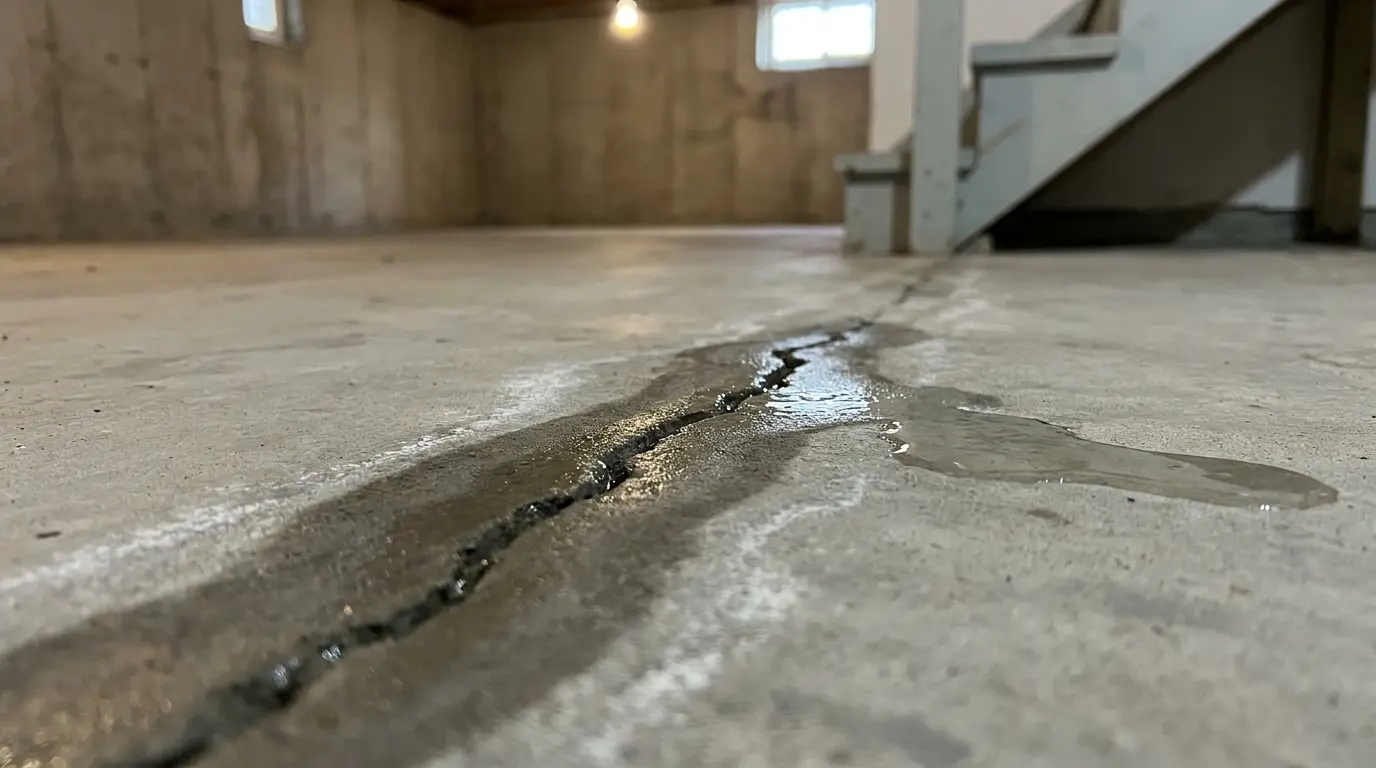
Why Is Water Coming Up Through My Basement Floor in Michigan?
Water coming up through a Michigan basement floor can be groundwater, a sump pump that quit, a plumbing leak or a backed-up floor drain. The cause decides who fixes it, but the standing water needs to come out fast.
Can Water-Damaged Basement Drywall Be Saved in Michigan?
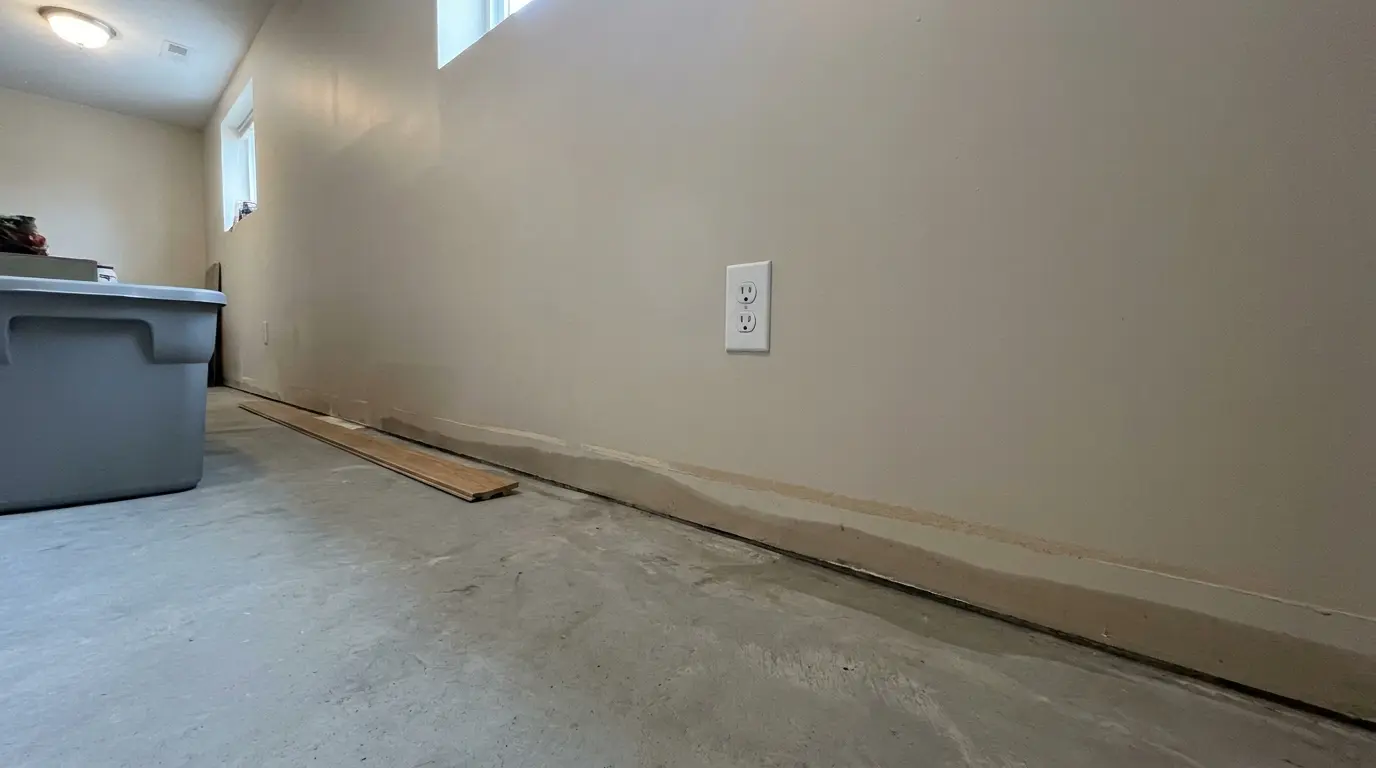
Wet basement drywall can be saved only if the leak is stopped, the water was clean, it dries fast and the board stays firm. Sewage, floodwater or wet insulation behind it means the wall comes out.
What Do You Throw Out After a Sewer Backup in Detroit?
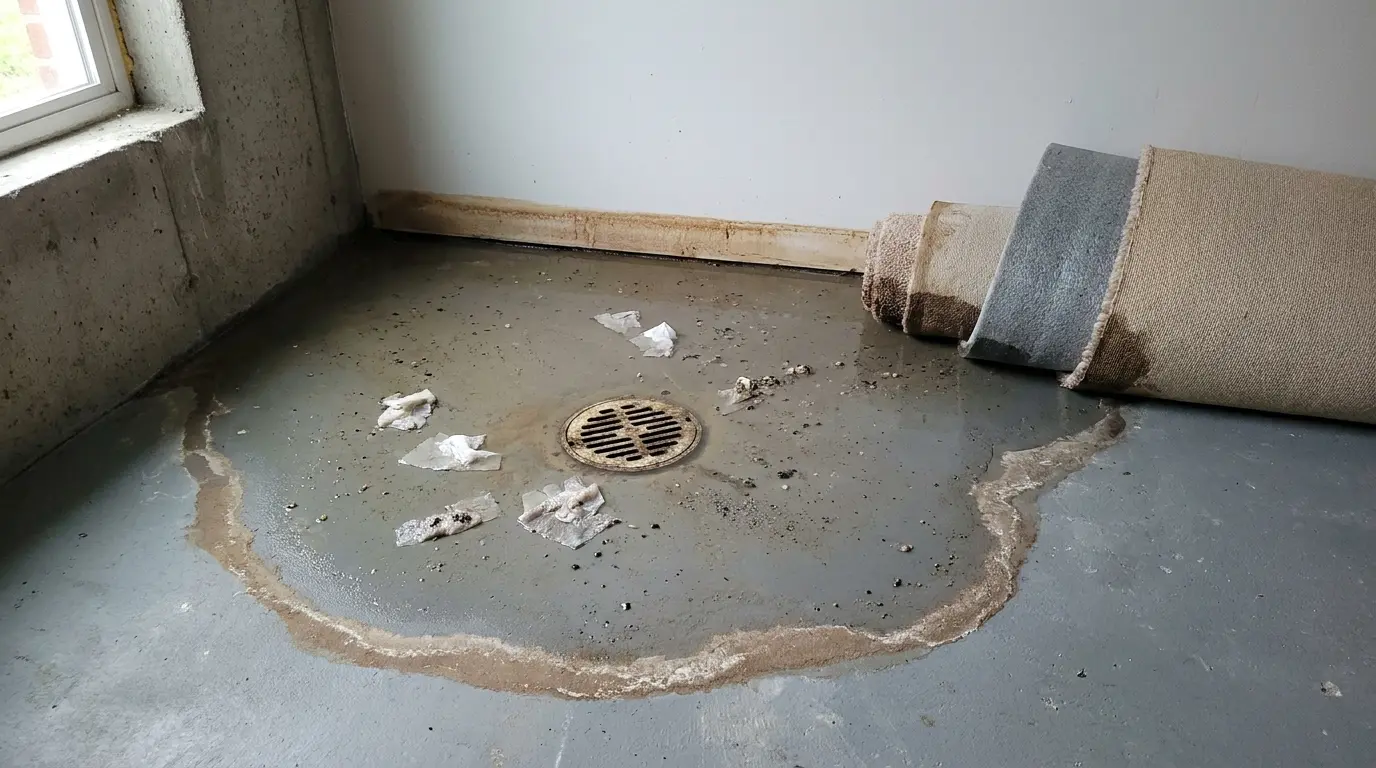
After a sewer backup in Detroit, soaked carpet, pad, drywall and insulation go, while concrete, tile and metal can usually be cleaned and kept. In most of the city, a storm-day backup is sewage too.
Tell us about your Water Damage Restoration needs in Oakland County, MI
Looking for Water Damage Restoration in Oakland County, MI? Tell our team what you need and we will help you understand the next step.
Thank You!
We've received your request and will contact you within 15 minutes during business hours.
Speak with the Response Flood & Fire team now
Call for immediate assistance and service.