
Why Is Water Coming Up Through My Basement Floor in Michigan?

Ryan Picklo
Ryan Picklo is at Response Flood & Fire, a restoration company in Rochester Hills, Michigan, working across Oakland, Macomb, St. Clair, Wayne and Lapeer counties. The company came out of construction, contracting and cleaning, so they read what water and soot have done behind the drywall rather than only what shows on the surface. Between them they have worked through thousands of insurance claims. He writes here about what actually happens on a restoration job, including the parts the industry would rather not explain.
Water comes up through a basement floor when the water under your house rises above the floor and finds a way in. That way in can be a crack, the joint at the base of the walls, a floor drain or the concrete itself.
The water can be groundwater pushed up from soaked soil. It can also come from a sump pump that quit, a plumbing leak or a sewer line backing up. Whatever the source, water left on the floor keeps soaking into anything it touches. That makes basement water extraction and drying the part that cannot wait for the lasting fix.
Ready to handle this with a pro?
You're reading about Why Do Michigan Basement Floors Let Water In at All. Get a fast quote for water damage restoration service in Oakland County, MI from Response Flood & Fire.
Or call (248) 453-7228
Why Do Michigan Basement Floors Let Water In at All?
Because the floor sits below the ground, and the ground holds water. A basement floor is a concrete slab at the lowest level of the house, with soil under it and around it. The water in that soil, the groundwater, normally stays below the slab. It can rise above the floor at times. In some spots it can stay there all the time, the City of Detroit's Basement Backup and Flooding Handbook tells residents.
For example, a house on low, wet ground needs its foundation drains or sump pump running nonstop. That is what keeps the groundwater below its floor.
Water moves from high to low. When the groundwater outside is higher than your floor, gravity pushes it toward any opening it can find. You may hear that push called hydrostatic pressure. A crack in the floor gives it a direct path in.
Any house with a basement can take on water this way, even one that has never had water before. A newer house can too, and new houses in this region are still often built with basements. Of new single-family homes started in 2025, 43.0% had a basement in the Census division that includes Michigan, against 16.4% nationwide (NAHB).
What Causes Water to Come Up Through a Basement Floor in Michigan?
When the water shows up is the first clue to where it comes from. Note the weather and the spot where water first appears before anything gets cleaned up.
Groundwater After Heavy Rain, Ground Thaw or Snowmelt
Seepage is groundwater working its way in through cracks, holes and other gaps in the floor or walls. It tends to show up during heavy rain, ground thaw or snowmelt, when the ground is full of water.
Look for it at cracks in the slab and along the seam where the floor meets the wall, often called the cove joint. Concrete also has small pores, and water can be drawn up through them, University of Minnesota Extension explains. That is how a damp patch appears on a slab with no crack in sight. Between wet spells, watch for signs of past moisture: a white crust on concrete, a musty smell, or carpet and wood breaking down.
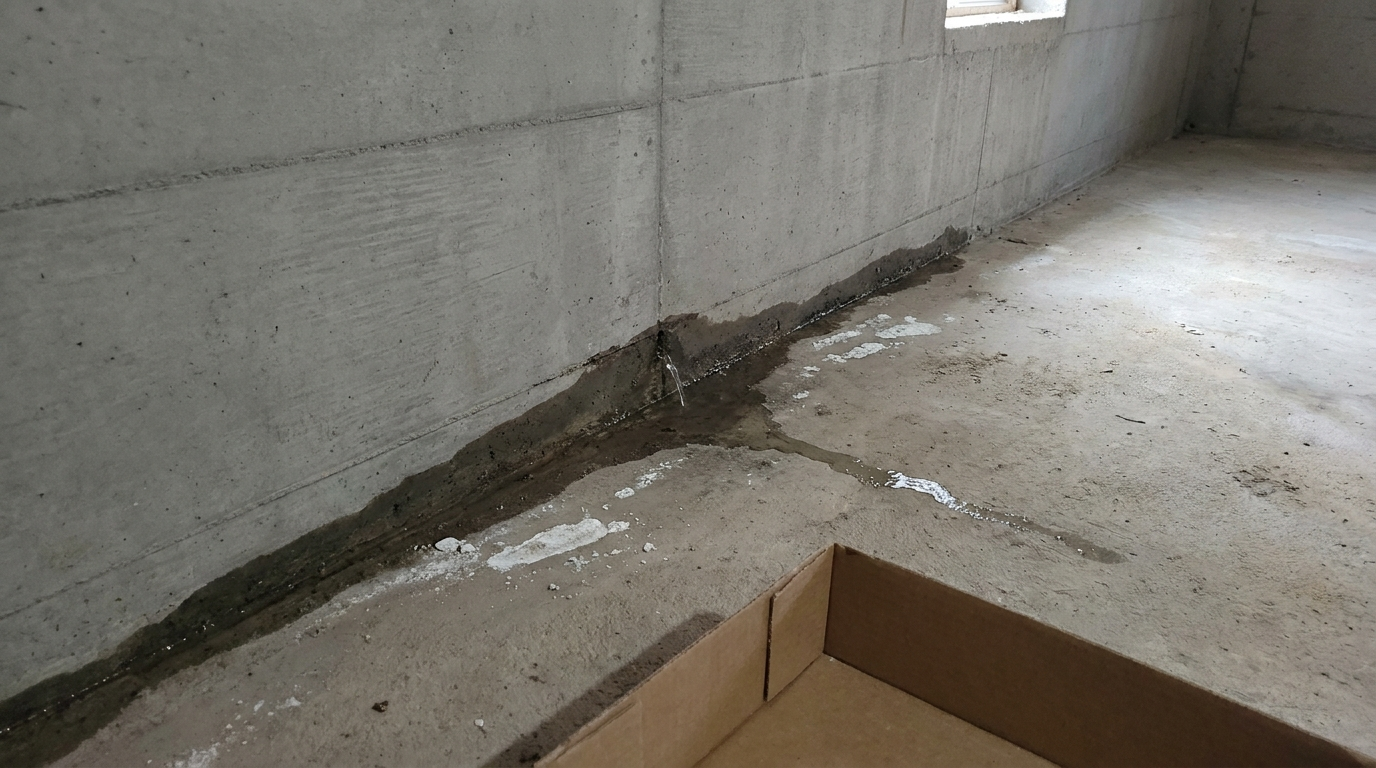
Water piling up outside makes it worse. For example, gutters that clog or freeze over can dump a roof's water beside the house, where it seeps down the wall. A window well that collects water works like a drain right against the foundation. Soil that has settled toward the house and downspouts that empty too close to it add to the load. Downspouts should carry water at least 4 to 6 feet from the foundation, the City of East Lansing tells its residents.
A Sump Pump That Quit or Fell Behind
Water rising out of the sump pit points to the pump. When a sump pump stops or falls behind, groundwater can climb until it spills out of the pit and across the floor. A power failure, a malfunction or a clog can each stop a pump. Say a storm knocks out the power: the pump stops just as the rain is raising the groundwater.
If the pit has a cover, a pump can stop without anyone noticing until the water reaches the floor. A sump pump should have backup power for outages, as the City of Detroit's handbook advises residents. While the floor is dry, you can check yours with the sump pump test East Lansing gives its residents.
Foundation drains can fail too. If the drain tile around the foundation clogs or collapses, groundwater can build up and spill in through the pit or floor.
A Plumbing Leak Under or Near the Floor
Water that shows up on a dry day makes the plumbing a stronger suspect. A supply line that breaks, a water heater that fails or a pipe split by a freeze can each put water on the floor. So can pipes under the slab that leak out of sight.
Water that is there rain or shine could be either one. A water meter can tell a supply leak from groundwater. In cold climates the meter can sit in the basement, so check it only if the floor around it is dry. With no water running anywhere in the house, read the meter, then read it again two hours later, as EPA's WaterSense leak checklist suggests. If the reading changed, you probably have a leak on the supply side. If the floor around the water heater is dry, check under the heater for pooling water or rust. If reaching it means standing in water, skip that check. A water bill that jumps for no clear reason is another clue.
Does It Mean the Foundation Is Failing?
Not on its own. In many cases a basement can be structurally sound and still not be built to drain water well. If a crack worries you, have it looked at before anyone seals or covers it.
Is Water From a Floor Drain Groundwater or Sewage in a Michigan Home?
It can be either one, or both at once, and you cannot tell by looking. Treat floor drain water as sewage until a plumber tells you otherwise.
When the sewer line from the house is blocked, or the sewer it feeds is full, wastewater can back up. It comes out through the lowest drain in the house, such as a basement floor drain. For example, roots that grow into the private sewer line can block it. Then the household's own wastewater has nowhere to go but up.
Groundwater can get into that same line. If the sewer line or the pipes under the floor leak, groundwater can pour in and choke the flow. Groundwater, wastewater or a mix of both can then rise from the floor drain, the City of Detroit's handbook warns residents.
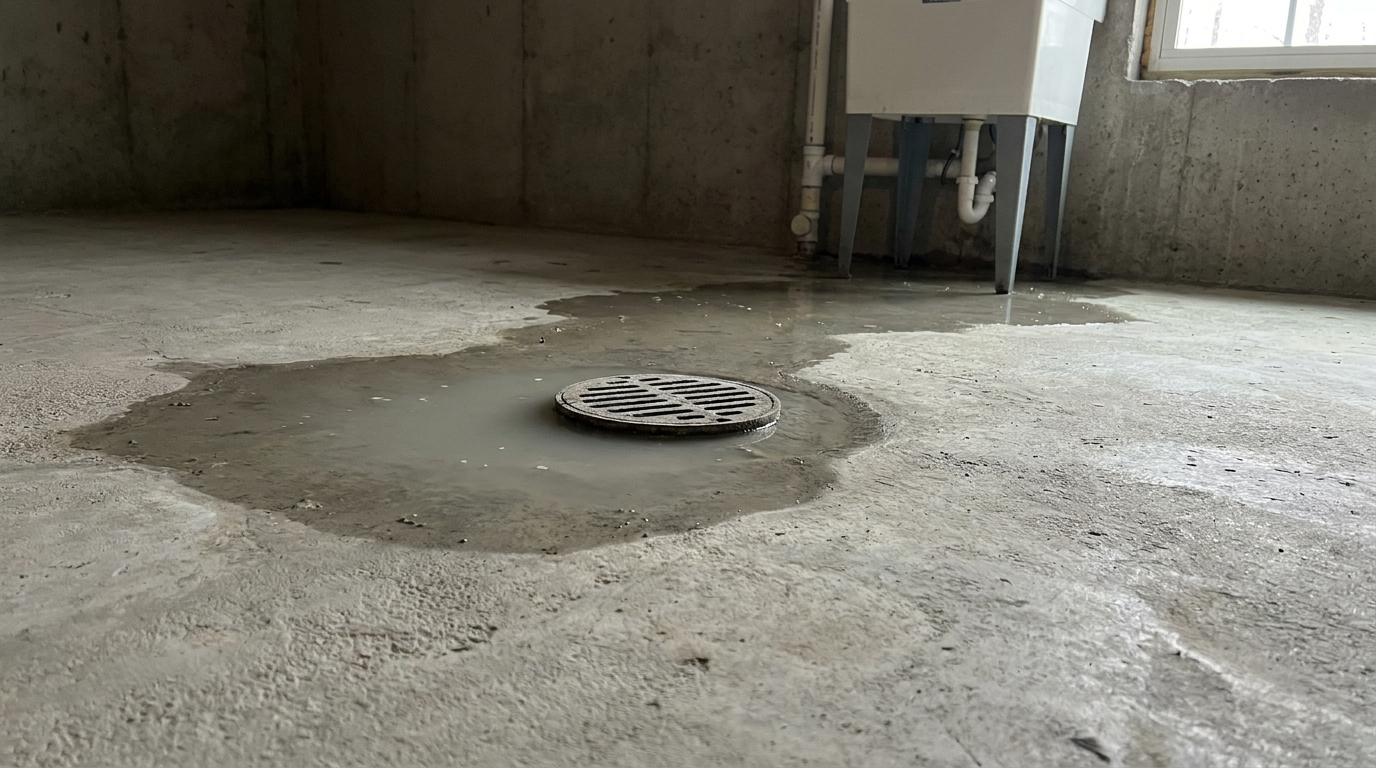
If you suspect a sewer backup, stop using water in the house until a plumber has checked the line. Every flush, shower and load of laundry drains toward the same pipe.
Groundwater alone needs the water removed and everything it reached dried. Sewage calls for a professional with experience cleaning buildings damaged by contaminated water, EPA advises. It also changes what can be kept. Our page on sewage backups in basements explains how that work is done. Whether you, your policy or a city pays is a separate question, covered in our guide to who pays for a sewer backup.
When you report the damage to your insurer, describe the cause instead of simply calling it a flood. A sewer backup or a failing sump pump may be covered under your policy, Michigan's Department of Insurance and Financial Services notes.
Ready to handle this with a pro?
You're reading about How Fast Does Standing Water on a Basement Floor Lead to Mold in Michigan. Get a fast quote for water damage restoration service in Oakland County, MI from Response Flood & Fire.
Or call (248) 453-7228
How Fast Does Standing Water on a Basement Floor Lead to Mold in Michigan?
Fast. When wet materials are dried within 24 to 48 hours of a leak, mold will not grow in most cases, EPA's mold guide says. So the clock starts when the water arrives, not when you find it. If water seeped in overnight, part of that window is already gone by morning.
On a basement floor, the risk sits in what the water reaches. For example, carpet and pad, cardboard boxes and the bottom of finished walls all soak up water and hold it.
A seep that comes back with every storm wets the same things again, so one round of drying will not end it. That is why mold control starts with stopping the water coming in, as Michigan State University Extension advises.
Children, pregnant people and anyone with asthma or a weakened immune system should stay out of cleanup work after a flood, EPA advises.
Don't paint or seal any surface that got wet until it is "completely dry on the inside," as EPA's flood guidance warns. That includes a quick coat of sealer or waterproof paint on a damp basement floor.
Who Should Michigan Homeowners Call When Water Comes Up Through the Floor?
That depends on the source, and it often takes more than one call. One trade stops the leak or seep, and another removes the water already there.
A plumber is the call for a floor drain backup, a failed sump pump, a broken supply line or a leaking water heater. A plumber can also run a camera through the sewer line to find a blockage, a crack or a collapsed pipe. If the floor drain keeps backing up, ask about a backwater valve, which lets water out but shuts when sewer water pushes back.
A basement waterproofer is the call when groundwater keeps seeping through cracks or along the walls with each wet spell. Sort out the gutters, downspouts and grading first, since they may solve it. If water still gets in after that, the next step is usually a drainage system, and that is the waterproofer's job.
Our crew handles the water that is already inside. We pull it out, dry the floor and walls, and rebuild what has to come out.
If a storm has already flooded the whole floor, start with the first safe steps in our guide to basement flooding in Warren.
Can you get the water out yourself? Not if it came up the floor drain; that is a job for a crew. Otherwise, follow the conditions in CDC's safety guidelines for a flooded home:
If you can reach the main power switch from a dry spot, turn it off. If you would have to step into water to reach it, leave it for an electrician. Before the power goes back on, an electrician should check the system.
Never switch power on or off, or use anything electric, while you are standing in water.
Once an electrician has cleared the power, you can use a wet-dry shop vacuum, wearing rubber boots.
Never run a generator or any gasoline-powered tool indoors, in the basement or garage, or in any partly enclosed space. Keep it at least 20 feet from any door, window or vent, even with the windows open, CDC warns.
A crew is still the safe choice, and the only one for more water than a shop vacuum can clear.
The Bottom Line on Water Coming Up Through Basement Floors in Michigan
Call us as soon as water starts coming up, even if a plumber is already on the way. A person answers our phone at any hour, every day of the year, and a crew is typically on site in about an hour.
We start with a free inspection, and financing is available. We work with all insurance companies and walk you through the recovery, insurance claim information included. Our invoice goes to you and the carrier, and we ask the carrier to pay us directly. Macomb County homeowners can follow each step, from the first call to the final invoice, on our water damage page for the county.
Related Posts
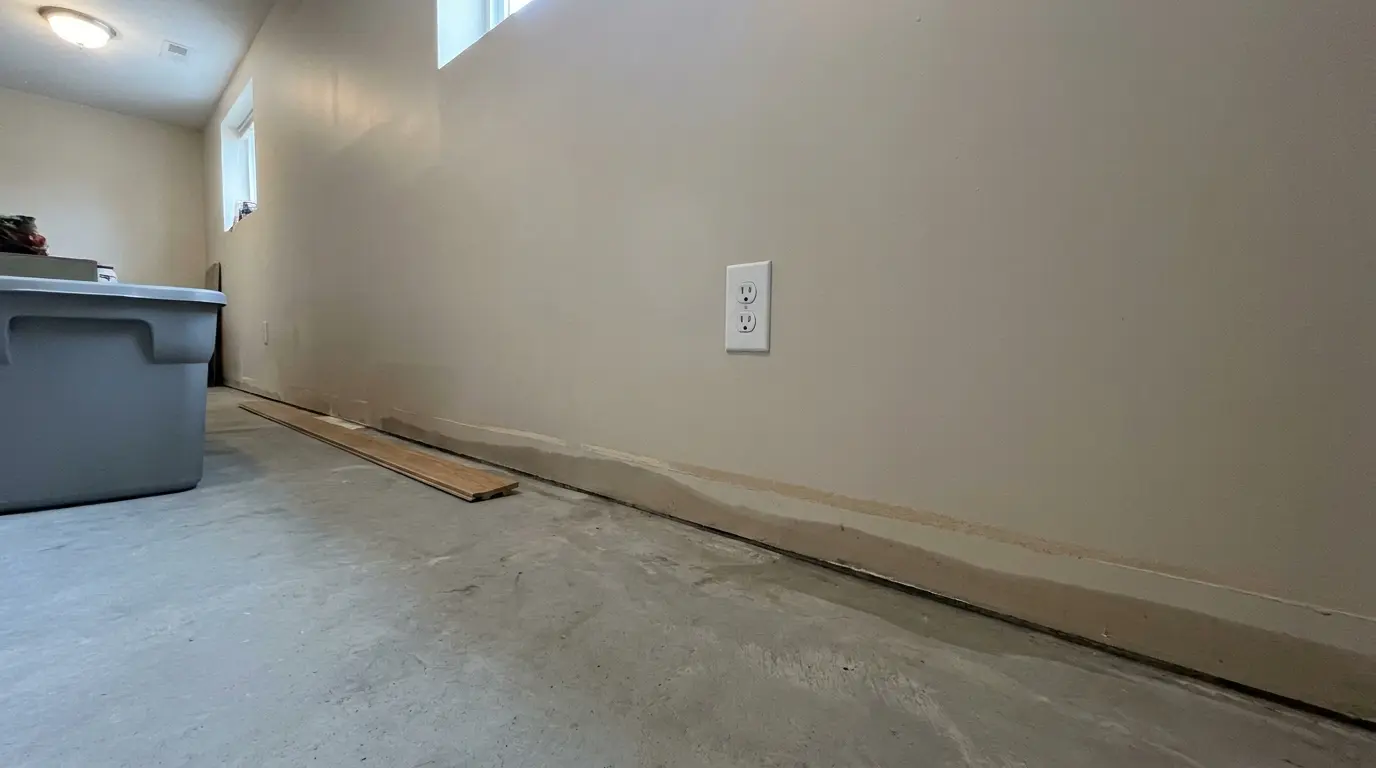
Can Water-Damaged Basement Drywall Be Saved in Michigan?
Wet basement drywall can be saved only if the leak is stopped, the water was clean, it dries fast and the board stays firm. Sewage, floodwater or wet insulation behind it means the wall comes out.
What Do You Throw Out After a Sewer Backup in Detroit?
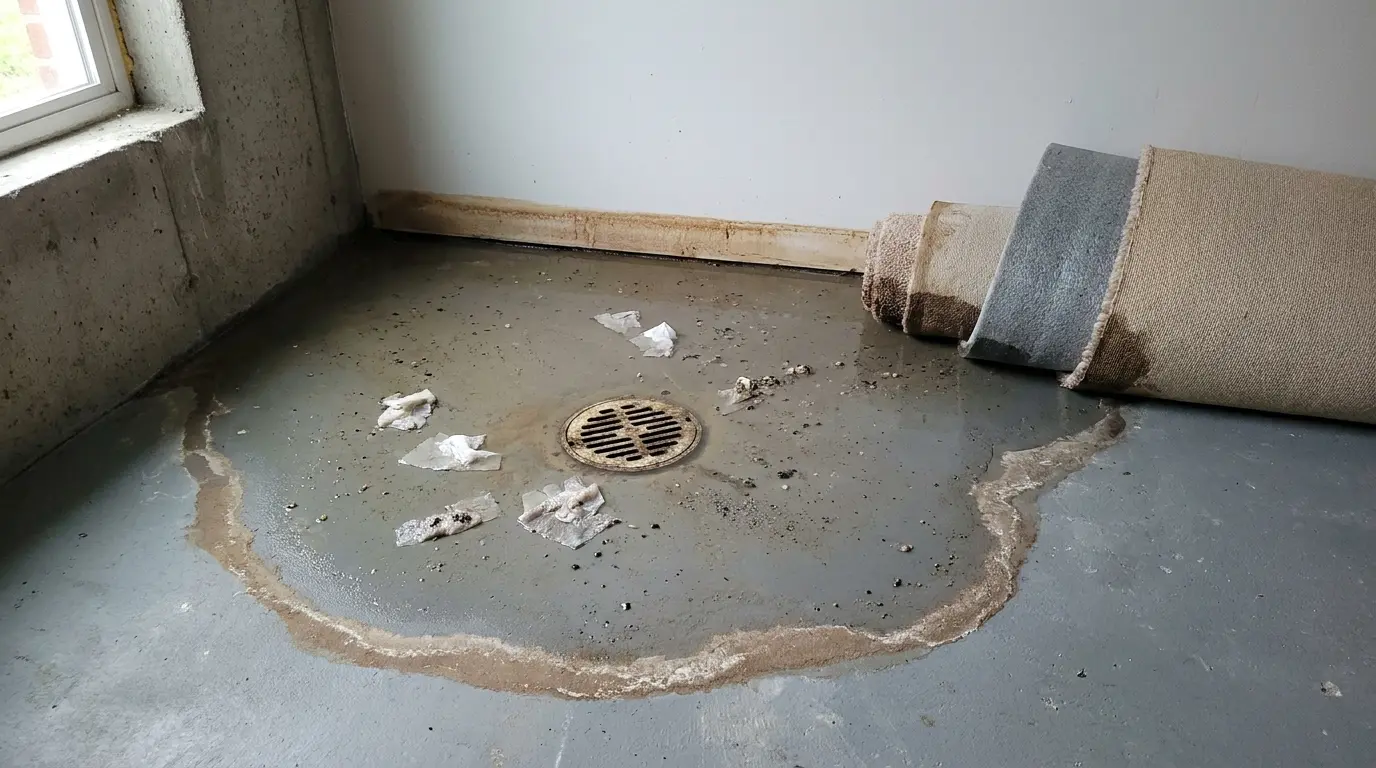
After a sewer backup in Detroit, soaked carpet, pad, drywall and insulation go, while concrete, tile and metal can usually be cleaned and kept. In most of the city, a storm-day backup is sewage too.
What Causes Black Soot on Walls in a Detroit Home in Winter?
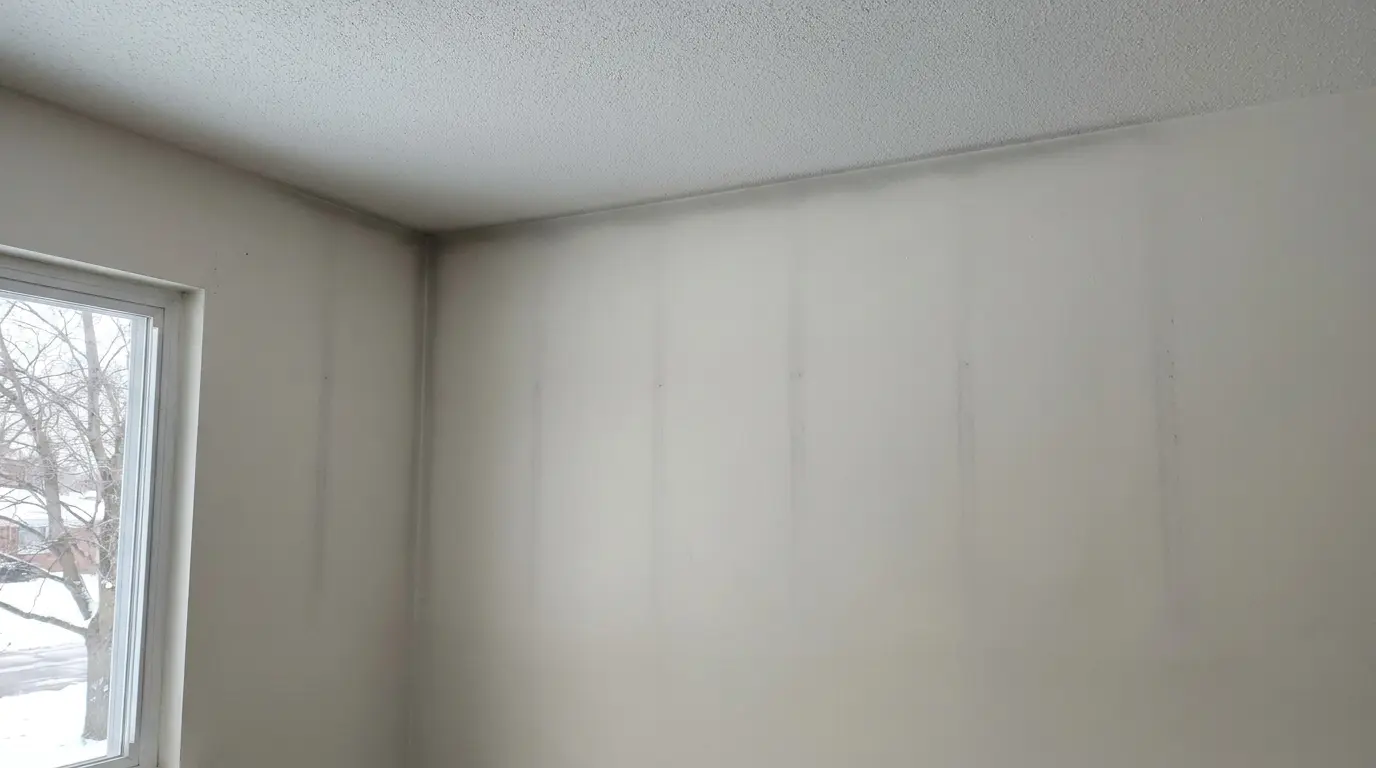
In a Detroit winter, black soot on walls with no fire behind it comes from something indoors burning dirty. Ghosting and candle soot clean up, but soot at the furnace or heating vents needs a heating technician first.
Tell us about your Water Damage Restoration needs in Oakland County, MI
Looking for Water Damage Restoration in Oakland County, MI? Tell our team what you need and we will help you understand the next step.
Thank You!
We've received your request and will contact you within 15 minutes during business hours.
Speak with the Response Flood & Fire team now
Call for immediate assistance and service.