
What Causes Black Soot on Walls in a Detroit Home in Winter?

Ryan Picklo
Ryan Picklo is at Response Flood & Fire, a restoration company in Rochester Hills, Michigan, working across Oakland, Macomb, St. Clair, Wayne and Lapeer counties. The company came out of construction, contracting and cleaning, so they read what water and soot have done behind the drywall rather than only what shows on the surface. Between them they have worked through thousands of insurance claims. He writes here about what actually happens on a restoration job, including the parts the industry would rather not explain.
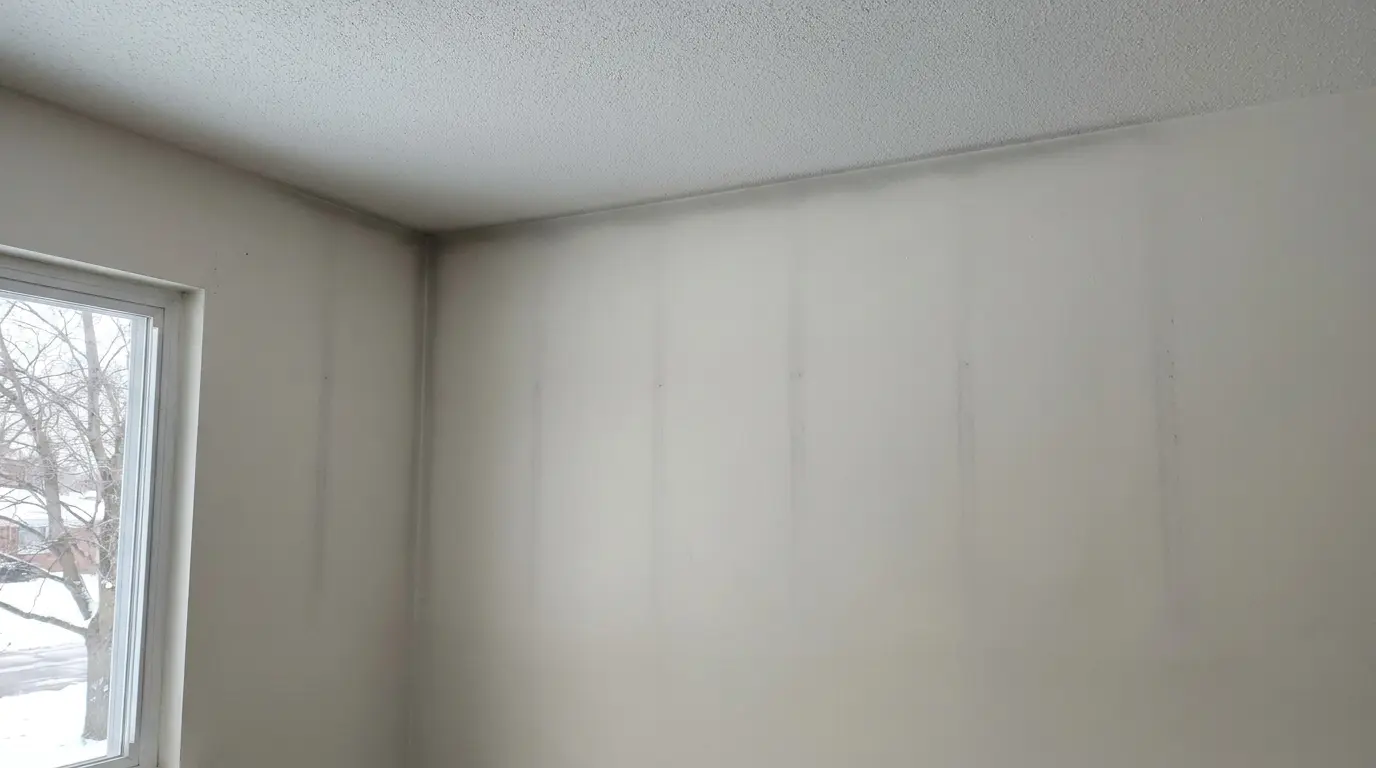
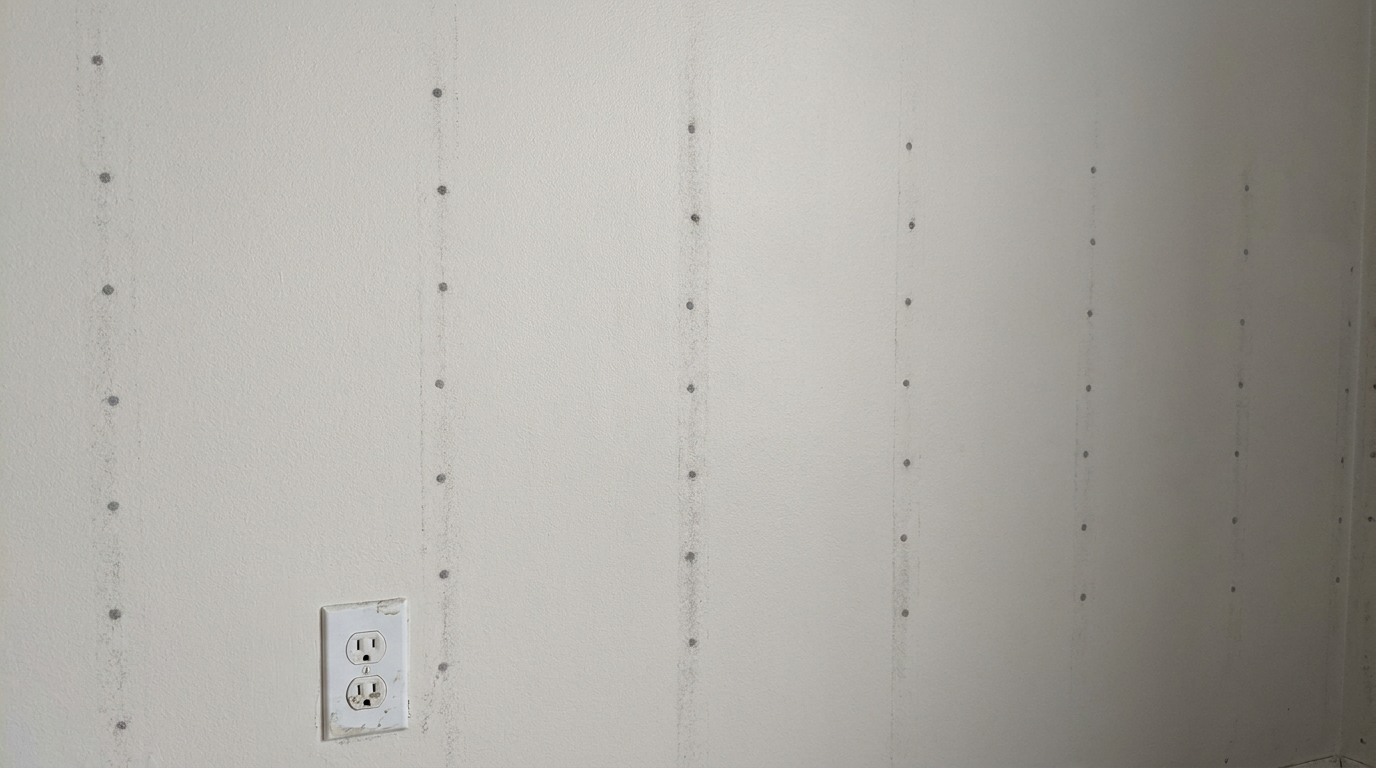
Black soot on walls with no fire behind it comes from something burning dirty indoors. That could be candles, a fireplace that spills smoke back into the room, or a furnace or boiler that is not burning cleanly. In a Detroit winter, the soot settles on the coldest strips of your outside walls. So it shows up as straight gray lines over the studs, a pattern called ghosting.
Ghosting and candle soot are a cleaning and painting job once the source is gone. Soot on the furnace itself, or coming out of the heating vents, is different. It points to a heating problem, and that is a safety question before it is a cleaning one. And if oily soot has spread through several rooms, that calls for professional soot cleanup.
Soot after an actual fire, even a small one, is a different job. For that, start with our guide on what to do after a house fire.
Ready to handle this with a pro?
You're reading about Why Do Detroit Winters Make Soot Show Up on Walls. Get a fast quote for water damage restoration service in Oakland County, MI from Response Flood & Fire.
Or call (248) 453-7228
Why Do Detroit Winters Make Soot Show Up on Walls?
Because winter puts a lot of indoor burning next to a lot of cold wall. The National Weather Service's Detroit/Pontiac office puts Detroit's normal January high at 32.3°F and low at 19.2°F, using 1991 to 2020 data. A normal January day barely climbs above freezing.
So for months the furnace or boiler runs and the windows stay shut. A candle, a gas stove or a fireplace adds fine particles to that closed-up air. A furnace or boiler that burns or vents poorly does too. Soot is the carbon left over when a fuel does not burn all the way. A flame that burns cleanly is blue and makes almost no soot.
That soot has to land somewhere, and it lands on cold surfaces. In an outside wall, studs, nails and screws pass more outdoor cold to the drywall than the insulation beside them. A cold surface holds a thin film of moisture, and fine soot and dust stick to it.
The bigger the gap between indoor and outdoor temperatures, the sharper those cold stripes get. That is why ghosting tends to show up in winter. By January, a Detroit wall can show what the house has been burning, drawn in lines over the framing. For example, rows of small dark dots on a ceiling mark the nail or screw heads under the paint. Thin insulation or leaky air sealing makes the pattern worse.
What Are the Causes of Black Soot on Walls in a Detroit Home?
With no fire involved, there are four main causes of black soot on walls. From least to most urgent, they are ghosting, candles, a fireplace that spills smoke back, and a furnace or boiler puff back.
Ghosting Over Cold Studs and Nail Heads
On its own, ghosting over studs and nail heads is mostly cosmetic. It does mean fine soot is in the air you breathe, though.
Look low, too. For example, a dark carpet line under a bedroom door that stays shut often comes from air squeezing through the gap. The carpet catches the soot like a filter. Dark lines where the carpet meets the baseboard form the same way.
Candle Soot
Many people do not realize that regular candle burning can blacken walls. Scented candles are the main source of candle soot, according to EPA's 2001 review of candles and incense as indoor air pollution sources. Candles in glass jars soot more, because the jar makes the air around the flame unsteady.
To cut candle soot, keep wicks short, keep candles out of drafts, and burn unscented ones. Incense and unvented kerosene or gas space heaters add fine soot too. So does high-heat frying under a range hood that does not vent outside. If you run an unvented heater, follow the maker's directions on its fuel and on keeping it adjusted, as EPA advises. While it runs, prop open the door between its room and the rest of the house, and crack a window.
A Fireplace That Spills Smoke Back Into the Room
A wood or gas fireplace that does not draw well can push smoke and soot into the room instead of up the chimney. Running a wood-burning fireplace and the furnace together for long periods can cause this back drafting. That is why DTE Energy's home safety page warns against doing both at once.
Gas logs can soot, too. For example, a pilot flame touching a log leaves soot on it, and the furnace fan can spread that soot through the house. A running furnace fan can also pull a gas fireplace's exhaust toward a return vent, staining the wall on the way. If a fireplace soots, have the chimney checked, and leave a gas fireplace to a qualified technician.
A Furnace or Boiler Puff Back
A puff back happens when fuel collects unburned inside a furnace or boiler, then lights all at once as the burner starts. The small blast pushes soot out through the heating system and into the house. Oil-fired equipment is more prone to it, but gas equipment can puff back too.
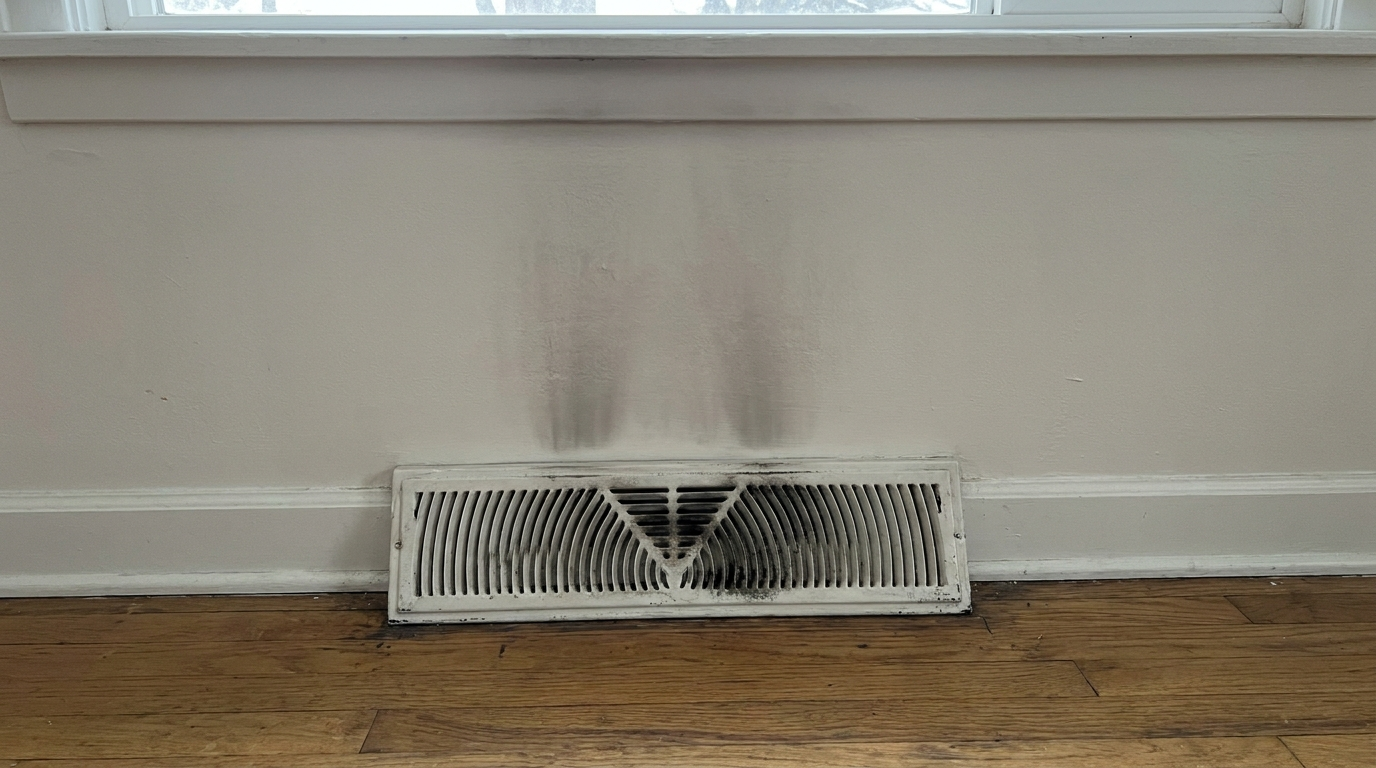
With ductwork, the furnace can carry that soot to every room, even closets and rooms with the door shut. With a boiler, which heats with water rather than ducted air, less soot tends to escape, and it may not spread as far. Small, repeated puff backs leave soot at the vents and on ceilings. A big one can leave an oily film that smears when touched.
How Can You Tell Soot From Mold on Walls in Detroit?
Check the pattern, the texture and the smell. Soot follows the house: straight lines, room edges and air paths. Mold follows moisture, in patches that spread where dampness lingers. In a heated Detroit house in January, dark lines that track the framing are probably soot.
| What to check | Soot (ghosting) | Mold |
|---|---|---|
| Pattern | Straight lines over studs and joists, dots over fasteners, shadows along baseboards, door bottoms and above vents | Irregular spots or blotches that grow over time |
| Texture | Flat and dusty, and it smudges if brushed | Fuzzy, slimy or velvety, and it can damage paint or the paper face of drywall |
| Color | Black or gray | Black, green, brown, white or other colors |
| Smell | Usually none, or faintly smoky | Often musty or earthy |
| What feeds it | Soot in the air plus a cold surface | Moisture that stays: a leak, high humidity or condensation |
| Where it shows | Outside walls, ceilings, near candles or a fireplace, near heating vents | Damp spots such as bathrooms, basements, under a leak, on window sills or behind furniture |
Spots right at a vent can go either way. If the vent or the wall around it is damp, suspect mold. If it is dry and the marks fan out with the airflow, suspect soot.
Both can turn up on the same cold wall. For example, an outside wall behind a dresser can get cold enough for moisture to condense. Soot can build up on that cold patch, and mold can start there if the dampness stays. If a wall is soft, damp or smells musty, treat it as a moisture problem first, and do not paint over it. Those point to possible mold growth, and the water source needs fixing before any cleaning. If you still cannot tell, a mold inspector can test a sample.
Ready to handle this with a pro?
You're reading about When Does Soot on Your Walls Point to a Furnace Problem in Detroit. Get a fast quote for water damage restoration service in Oakland County, MI from Response Flood & Fire.
Or call (248) 453-7228
When Does Soot on Your Walls Point to a Furnace Problem in Detroit?
When the soot gathers at the heating system, or along the path its air travels. Ghosting draws lines over cold framing anywhere in the house. A heating problem leaves soot where the burner and its air go. Look for:
Soot or black flakes on or around the furnace or boiler, or on the walls and ceiling of the furnace room.
Soot on or inside the supply vents in more than one room.
A bang or puff sound when the burner lights.
On a gas stove, the flame is a clue too. A yellow-tipped flame that persists often means the burner is out of adjustment and putting out more pollution. That is EPA's guidance for gas stoves. Ask your gas company to adjust the burner until the tip burns blue. A furnace or boiler flame is different: if it looks wrong to you, leave it to a qualified heating technician.
Soot from a heating system matters for your health, not just your walls. Particles from fuel that does not burn completely can lodge in the lungs and irritate them. The more urgent risk is carbon monoxide (CO), a gas you cannot see or smell. A furnace or boiler that leaves soot is not burning or venting the way it should. A forceful puff back can even knock the flue pipe loose, which can let CO into the house.
If a CO alarm sounds, go outside right away and call 911, as the Michigan Department of Health and Human Services and LARA advise. Do the same if you suspect CO poisoning, which feels like the flu: headache, dizziness, nausea or confusion. Stay out, even if you feel fine, until the fire department says it is safe to go back in. Michigan's guidance also calls for a CO detector on every level and near sleeping areas, including the basement and furnace room, tested monthly.
If any of the signs above fit, call a qualified heating technician right away, before anyone cleans the walls. A system that is still sooting will only coat them again. While you wait, turn the heat off at the thermostat. Leave it off until the technician has checked the system. Furnaces that burn gas or oil can produce CO, so have a qualified technician service the heating system every year, as CDC advises.
Can You Clean Soot Off Walls Yourself in a Detroit House?
Yes, for light ghosting or candle soot on a wall or two, once the source is gone. No, for oily soot, soot from a puff back, or soot spread through several rooms.
The catch is that soot smears. Wiping it with water or a household cleaner can push it deeper into paint and other porous surfaces. A vacuum without a HEPA filter can blow the finest particles back into the air. And scrubbing oily soot can damage a wall for good.
For light ghosting, go dry before wet. Lift the loose soot first with a dry-cleaning soot sponge, or a HEPA vacuum with a soft brush. Then dab with a mild detergent and a soft cloth instead of scrubbing. Skip bleach, which does nothing to soot. Once the wall is clean and dry, a stain-blocking primer keeps the gray from showing through new paint.
Soot comes in types: dry from hot, fast fires, oily from smoldering fires and puff backs, and protein from kitchen fires. Home cleaning stops when:
The soot is oily or sticky, or smears into streaks when touched.
It covers several rooms, or comes back soon after you clean it.
It came from a puff back or a fire.
Walls and ceilings coated in that kind of soot are a job for professional soot removal. After a puff back, and once it is safe to be inside, photograph the soot before anyone cleans. Get the walls, ceilings, registers and the furnace area, in case you file an insurance claim. A smoky smell that lingers after the soot is gone is a separate job: see our page on getting rid of smoke odor.
The Bottom Line on Black Soot on Walls in Detroit
When the soot is past a light clean and a coat of primer, give us a call. A person answers our phone at any hour, every day of the year. We are typically there in about an hour for a free inspection.
Filing a claim after a puff back or a fire? We walk you through the recovery, including insurance claim information, and we work with all insurance companies. For soot from an actual fire, see how a fire insurance claim works, or read about fire damage help for Oakland County homes.
Related Posts
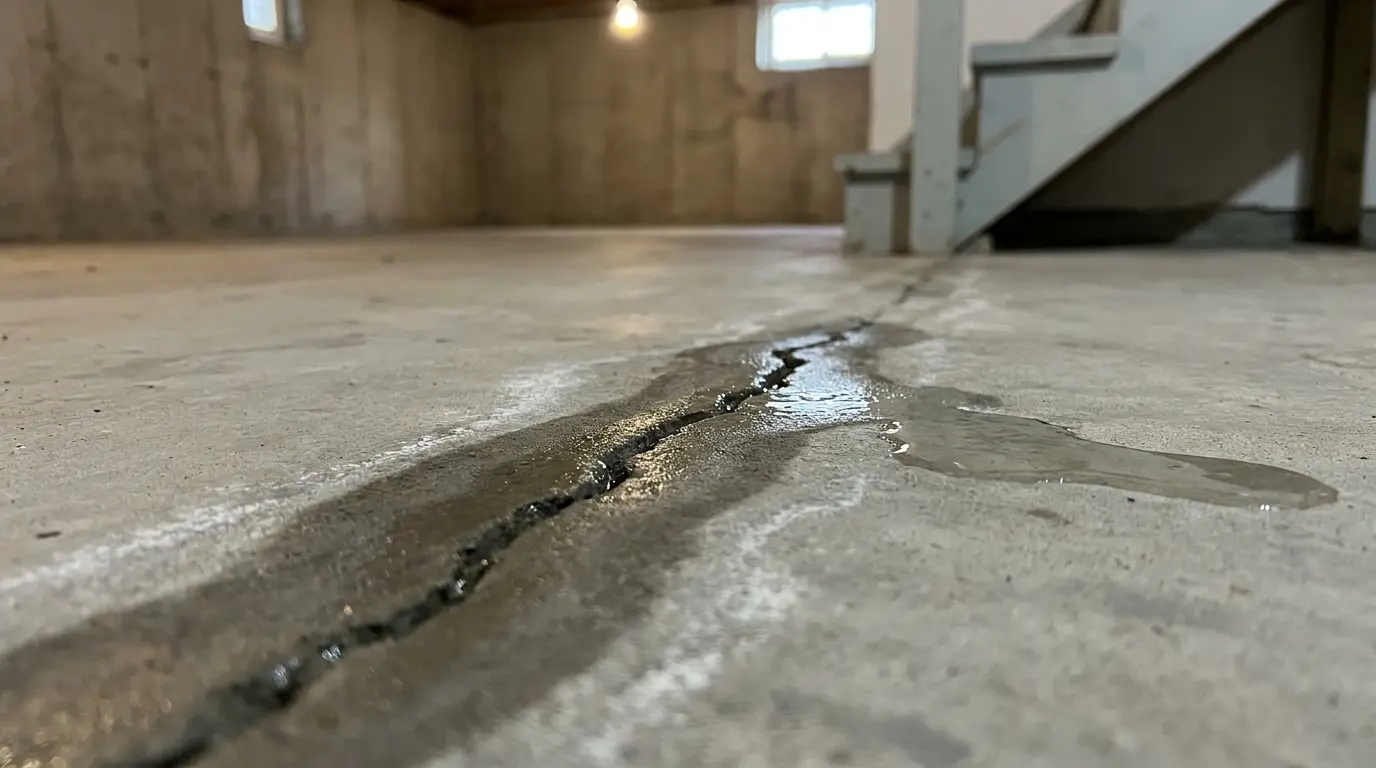
Why Is Water Coming Up Through My Basement Floor in Michigan?
Water coming up through a Michigan basement floor can be groundwater, a sump pump that quit, a plumbing leak or a backed-up floor drain. The cause decides who fixes it, but the standing water needs to come out fast.
Can Water-Damaged Basement Drywall Be Saved in Michigan?
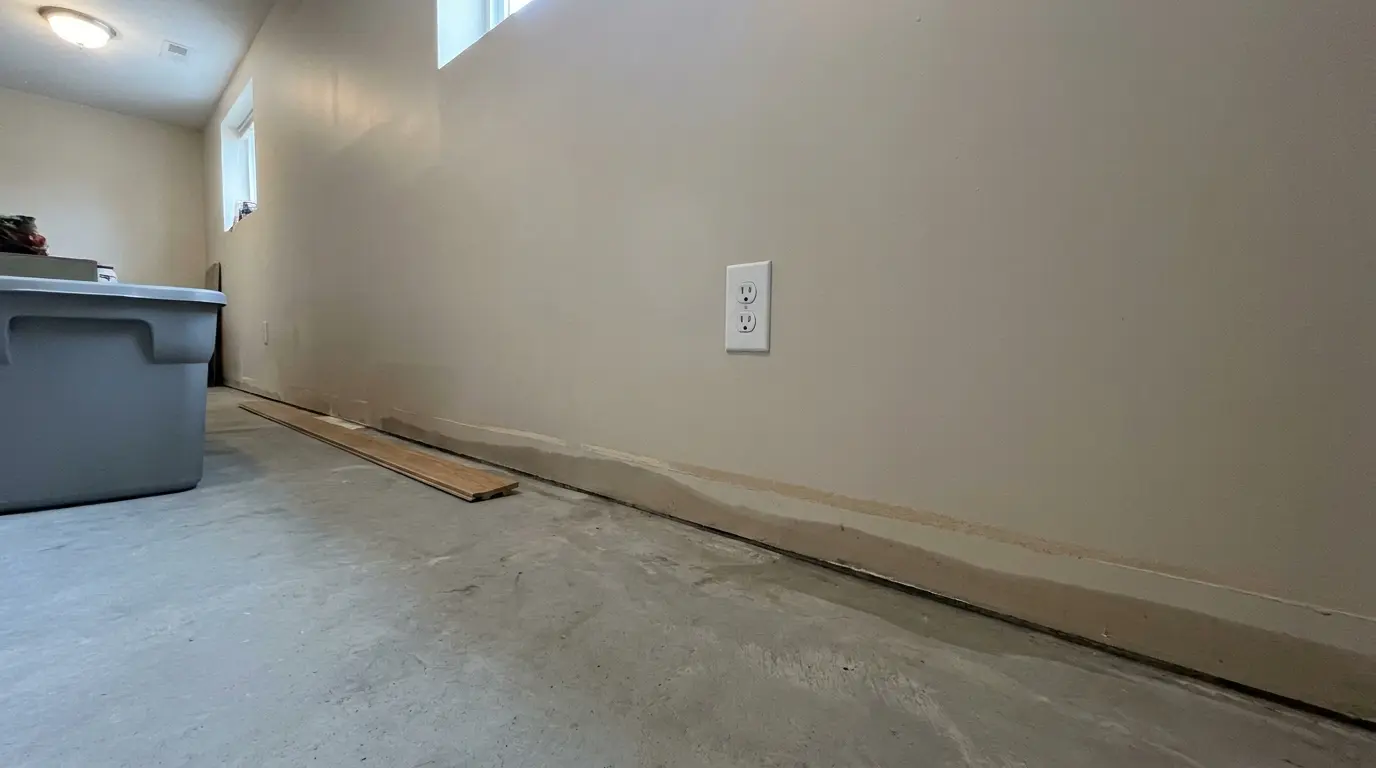
Wet basement drywall can be saved only if the leak is stopped, the water was clean, it dries fast and the board stays firm. Sewage, floodwater or wet insulation behind it means the wall comes out.
What Do You Throw Out After a Sewer Backup in Detroit?
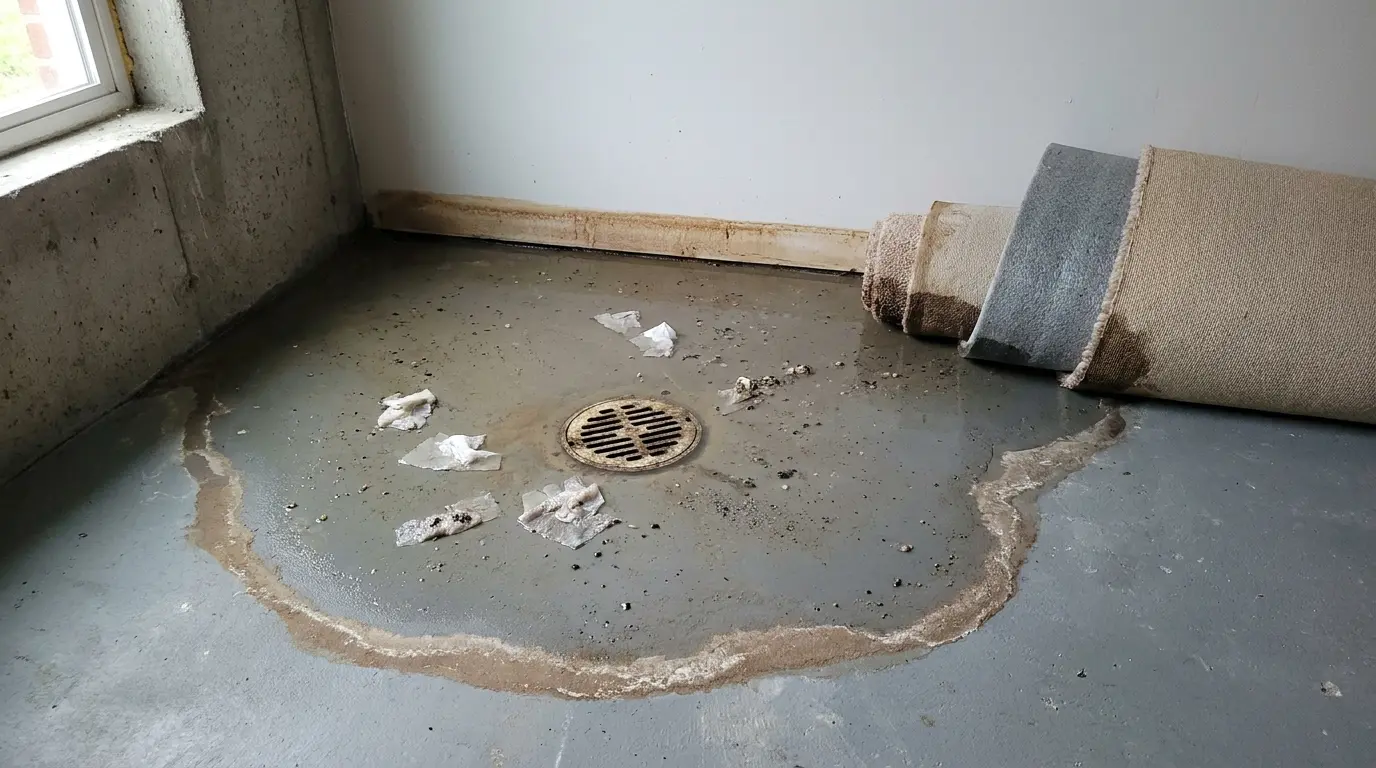
After a sewer backup in Detroit, soaked carpet, pad, drywall and insulation go, while concrete, tile and metal can usually be cleaned and kept. In most of the city, a storm-day backup is sewage too.
Tell us about your Water Damage Restoration needs in Oakland County, MI
Looking for Water Damage Restoration in Oakland County, MI? Tell our team what you need and we will help you understand the next step.
Thank You!
We've received your request and will contact you within 15 minutes during business hours.
Speak with the Response Flood & Fire team now
Call for immediate assistance and service.