
Do You Need Flood Insurance in St. Clair Shores?

Ryan Picklo
Ryan Picklo is at Response Flood & Fire, a restoration company in Rochester Hills, Michigan, working across Oakland, Macomb, St. Clair, Wayne and Lapeer counties. The company came out of construction, contracting and cleaning, so they read what water and soot have done behind the drywall rather than only what shows on the surface. Between them they have worked through thousands of insurance claims. He writes here about what actually happens on a restoration job, including the parts the industry would rather not explain.
You have to carry flood insurance in St. Clair Shores if your home is in a high-risk area on the Federal Emergency Management Agency (FEMA) flood map and your loan is federally backed. In that case, Congress requires federally regulated or insured lenders to make you buy it (FEMA). For most other homes in the city, it is your choice, but a standard homeowners policy does not cover flood (Michigan Department of Insurance and Financial Services), so a separate flood policy is the way to insure against it.
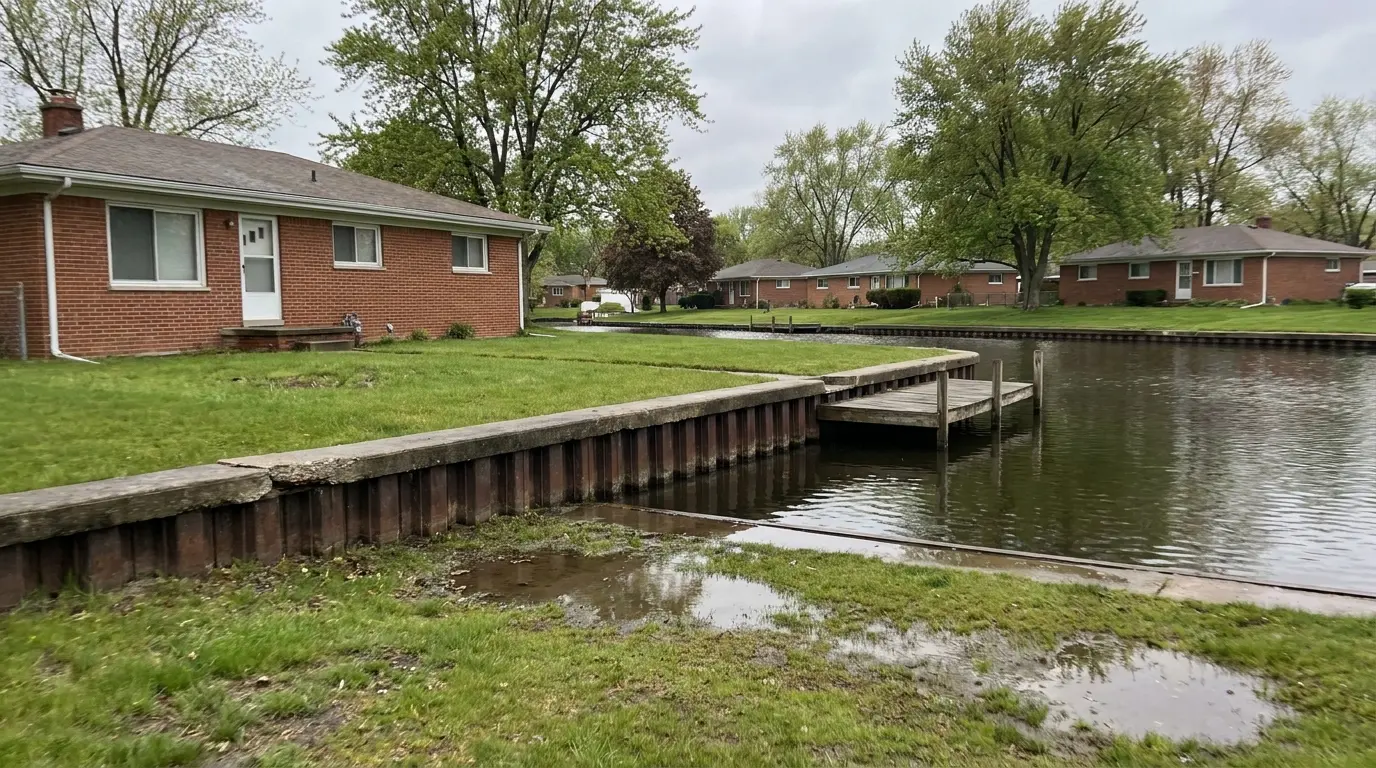
What does flood insurance not cover? On the standard federal flood policy, the gaps include the finished parts of a basement and most belongings kept there, your extra living costs while you are out of the house, and seawalls and docks (the policy text).
If water is already in your house, start with our flood cleanup page. Everything below is about the coverage you choose before that day.
Ready to handle this with a pro?
You're reading about Who Has to Carry Flood Insurance in St. Clair Shores. Get a fast quote for water damage restoration service in Oakland County, MI from Response Flood & Fire.
Or call (248) 453-7228
Who Has to Carry Flood Insurance in St. Clair Shores?
Homeowners with a federally backed loan on a building in a Special Flood Hazard Area have to carry it. The lenders covered by the federal rule must require it, tell loan applicants about it and enforce it, so you should hear about it when you apply (federal lending rule).
On FEMA's maps, those high-risk areas are the zones whose names begin with A or V (FEMA flood zones). If the map puts your home in the floodplain, you may also hear it first from your homeowners insurance company (city flood map page).
Outside those zones, or once the mortgage is paid off, the federal requirement no longer applies, and whether to buy a policy is usually your call. For example, when a lakefront mortgage is paid off, no lender is left to require the policy, but the flood risk on the map has not changed.
Any St. Clair Shores homeowner can still buy one. The city takes part in the National Flood Insurance Program, or NFIP (FEMA's Michigan community list), and any homeowner who lives in a participating community is eligible, whether the home is in a high-risk zone or not (NFIP eligibility).
That matters because a standard homeowners policy does not fill the gap. For how the flood exclusion in a homeowners policy works, and why rain through a roof and water rising from outside are treated so differently, see our Novi guide to homeowners insurance and water damage.
So the first question is short: is your house in an A or V zone, and is your loan federally backed? If both answers are yes, the decision is made for you. If either answer is no, the sections below are what to weigh.
How Does Your Flood Zone Change Your Insurance in St. Clair Shores?
The zone decides whether a lender must require flood insurance, and where the home sits is part of what sets the price. Only a portion of St. Clair Shores is in FEMA's floodplain, and FEMA redraws its maps periodically, so a home can move into or out of it from one map to the next (city flood map page).
Check your own address on that page, which links to the Macomb County and FEMA map lookups. If FEMA's map puts your home in the floodplain but you have a survey or other evidence that shows otherwise, you may qualify for a Letter of Map Amendment, and the same page links the paperwork.
The line that matters is the base flood elevation. For a new home in the flood hazard zone, the city's construction guidelines use a base flood elevation of 578.6 feet (NAVD 88) and deny the application if any corner of the proposed building sits below it.
An existing home in a high-risk area that was not built to that standard, with its lowest floor or basement below the base flood elevation, carries a high flood premium (FEMA guidance).
Three things set an NFIP rate: where the home is built, how it is built and what it would cost to replace it. An elevation certificate documents your building's elevation, and having one can lower the price (NFIP pricing).
Some communities earn a discount on NFIP policies across the community, including policies outside the high-risk zones, by joining FEMA's Community Rating System. St. Clair Shores had no Community Rating System class listed in FEMA's Michigan status report dated September 3, 2025, so policies here got no community discount as of that report (FEMA community status report). Ask your agent whether that has changed, since FEMA updates its list of participating communities.
Do You Need Flood Insurance Away From the Lake in St. Clair Shores?
The federal requirement does not reach homes outside the high-risk zones, but a policy is still worth weighing, because flood claims do not stop at the map line. Nationwide, from 2014 to 2024, nearly one-third of NFIP flood insurance claims (29%) came from areas outside the current high-risk flood areas (NFIP claims data).
You do not have to be in a flood zone to have a flood (Michigan's insurance department). On the standard flood policy, the test is what the water did, not where the map line runs.
The standard policy counts a flood when water temporarily covers two or more acres of normally dry land, or two or more properties with yours among them, from causes such as overflowing inland waters or an unusual and rapid runoff of surface water (the policy's definition).
For example, a summer downpour that sends water across your street and several yards, then in through basement windows, can meet that test. Water that comes up only through your own floor drain usually does not, and that backup question has its own section below.
The lake does not stay put either. Lake St. Clair set a new monthly mean water level record in May 2019 and broke it in May 2020 (U.S. Army Corps of Engineers). Lake levels and flood maps both change, so check the current map rather than the one from the year you bought.
Away from the water, the question is less whether you must buy and more what a flood would cost you to put right. If your basement is finished, or holds things you would need to replace, read the next two sections before you decide. The standard flood policy covers only part of a basement, and a backup through a floor drain may need a different add-on altogether.
Ready to handle this with a pro?
You're reading about What Does Flood Insurance Cover in a St. Clair Shores Basement. Get a fast quote for water damage restoration service in Oakland County, MI from Response Flood & Fire.
Or call (248) 453-7228
What Does Flood Insurance Cover in a St. Clair Shores Basement?
Mostly the equipment that runs the house and the structure itself, plus a few appliances, and very little of the finished space or what is stored there. The standard flood policy treats any area with its floor below ground level on all sides as a basement, which describes a typical full basement (the policy text).
In a basement, building coverage is limited to a set list, and each item counts only if it is installed where it works and, when it needs power to run, connected to it. The list includes the furnace and water heater, central air conditioning, the sump pump, electrical outlets, switches and breaker boxes, attached stairs, nonflammable insulation, the foundation walls, and drywall that is unfinished, meaning nailed up but not taped or floated. Cleanup is covered too.
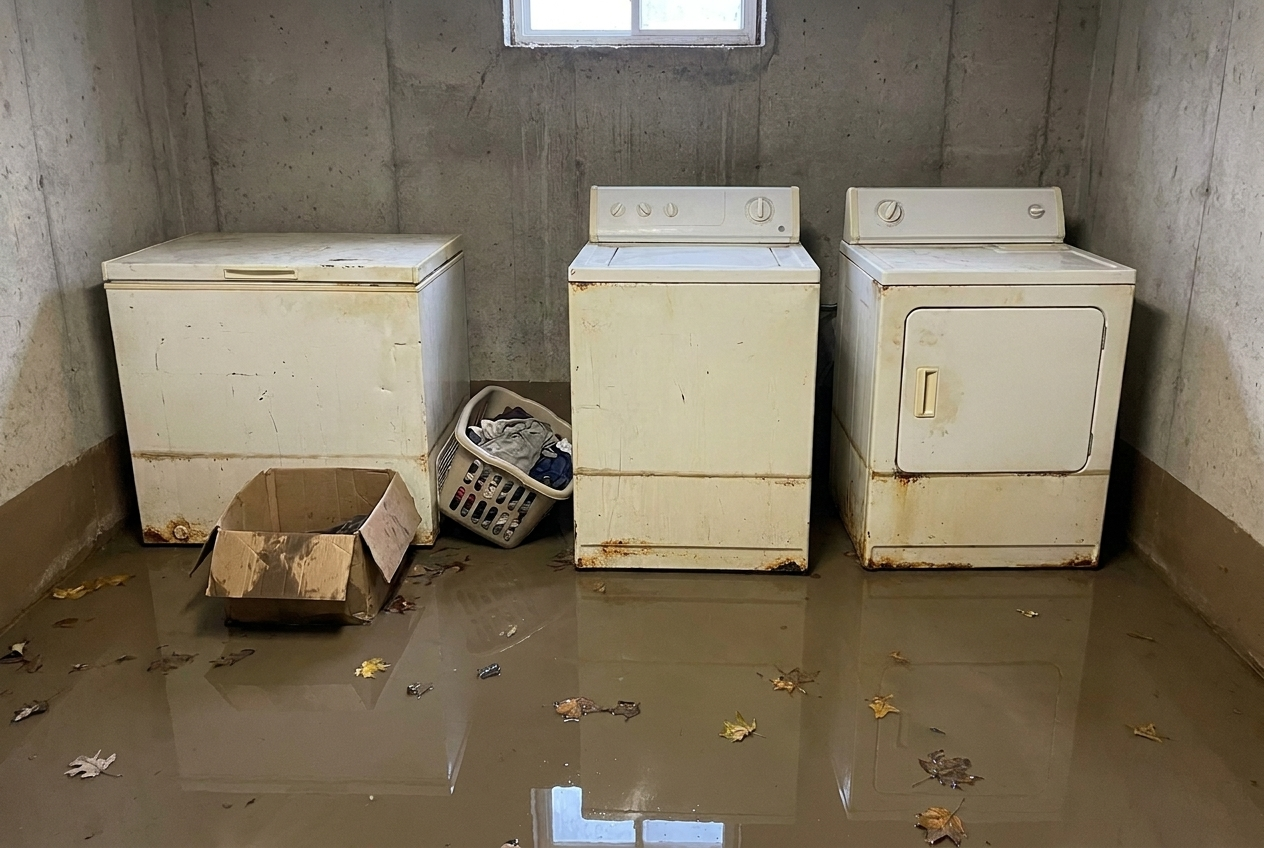
Belongings usually need their own coverage, since building and contents coverage are typically bought separately, with separate deductibles (NFIP). With contents coverage, the policy reaches only a few belongings in a basement: clothes washers and dryers, food freezers (not walk-in units) and the food in them, and portable or window air conditioners, again only if installed where they work and, when they need power, connected.
Anything not on those lists falls outside basement coverage, and that takes in most of what makes a basement finished: taped and painted drywall, paneling, carpet and other floor coverings, furniture, and the boxes, tools and electronics stored down there.
For example, if floodwater reaches the outlets in a finished basement, a standard flood policy with both building and contents coverage could pay for the furnace, the water heater, the outlets and the washer and dryer, but not the carpet, the finished walls or the couch.
Mold that grows after the water is a separate question, and our guide to mold and insurance in Birmingham walks through when a flood policy pays for it. If the water is already in, start with the first steps for a flooded basement in our Warren guide.
Does Flood Insurance Cover a Floor Drain Backup in St. Clair Shores?
Only when a flood in the area caused it. The standard flood policy leaves out water that backs up through sewers or drains, or overflows from a sump, unless there is a flood in the area and that flood is what caused the backup (the policy text).
A water and sewer backup endorsement on your homeowners policy is the add-on for the other case. It is written to cover water that backs up through a sewer or drain, and water that overflows from a sump, including when the sump pump breaks down. It typically does not cover loss due to a flood, it pays only up to the limit you select, and it is not automatically part of a homeowners policy, so you ask your agent to add it (Michigan's backup coverage guide). It is worth a look if your basement is finished or holds belongings.
Here is how the two split. Say a summer thunderstorm overloads the sewer and water comes up the floor drain while the street outside stays dry. With no flood in the area, the flood policy would not respond, and the backup endorsement is the coverage written for that.
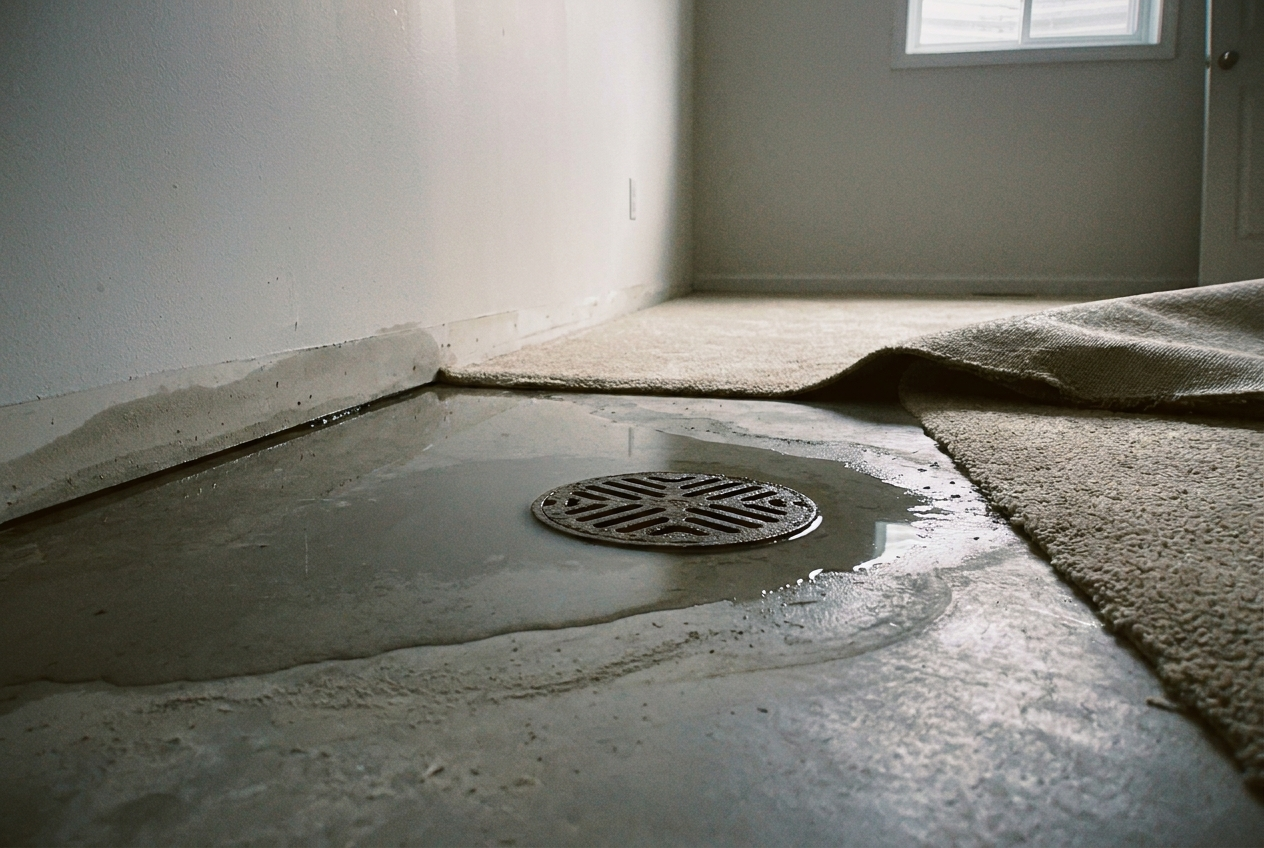
Now say floodwater covers the neighborhood and that flood pushes water up the same drain. The flood policy is the one that answers, within its basement limits, and the endorsement typically would not, because it leaves out loss due to a flood.
So which does a St. Clair Shores basement need? If backups are the realistic risk, the endorsement. If the home is in or near the floodplain, the flood policy. A finished basement in a canal-front home can be exposed to both, so it may need both.
One more path sits outside your insurance entirely. A claim against the city for a sewer backup is separate from either policy, and St. Clair Shores lists how to start one on its flood claim page.
How Long Does It Take for Flood Insurance to Start in St. Clair Shores?
Usually 30 days: a new NFIP policy takes effect at 12:01 a.m. on the 30th calendar day after you apply and pay, and the same wait applies when you add coverage or raise the amount (44 CFR 61.11). Paying your agent does not count as paying the NFIP. If your application or request for more coverage, with the full amount due, reaches the NFIP or the insurance company that writes the policy more than ten calendar days after you applied, and was not sent by certified mail within four calendar days of applying, the wait is counted from the day it arrives (the same rule).
The main exception is a home loan. Under the same rule, when you first buy the policy in connection with making, increasing, extending or renewing a loan on the property, coverage can start at the closing, provided the request, the application and the payment are all in at or before the closing. A few narrower exceptions shorten or remove the wait, such as a one-day wait after some flood map changes, and the NFIP lists them.
Buying once the water is rising does not help with that flood. For a policy that took effect at a loan closing, the standard policy does not pay for a flood that was already underway before coverage took effect. For any other policy, it does not pay for a flood already underway on or before the day you applied and paid in full, a date set by the arrival rule above (the policy text).
For example, if you wait until spring storms are in the forecast, a new policy may not start in time for them. The practical rule is to buy well ahead of the season you worry about, and to add contents coverage at the same time rather than later, since an increase waits too.
You buy an NFIP policy through an insurance agent, and every company that sells it charges the same rates, so there is no need to shop the price (NFIP rates). If your agent does not sell flood insurance, the NFIP's agent finder can point you to one who does.
You may also be able to buy flood coverage from a private insurer (Michigan's insurance department). If you do, ask when its coverage starts, because the 30-day rule above comes from the NFIP's own regulations.
Ready to handle this with a pro?
You're reading about Key Takeaways on Flood Insurance in St. Clair Shores. Get a fast quote for water damage restoration service in Oakland County, MI from Response Flood & Fire.
Or call (248) 453-7228
Key Takeaways on Flood Insurance in St. Clair Shores
You have to carry flood insurance in St. Clair Shores when your home is in a high-risk zone and your loan is federally backed. For most other homes it is your choice, and a standard homeowners policy does not cover flood.
Flood claims also come from outside the high-risk areas, so a home outside the mapped zone can still flood. Check your address on the city's map page, since FEMA redraws its maps.
In a basement, the standard federal flood policy covers mainly the equipment and the structure, plus a few appliances with contents coverage. On that policy, a floor drain backup is covered only when a flood in the area caused it, and a water and sewer backup endorsement is the add-on for backups without a flood.
A new NFIP policy usually takes 30 days to start (44 CFR 61.11), so buy it well before you need it.
When water does get in, a person answers our line at any hour, every day of the year, and we are usually at your door in about an hour for a free inspection. We work with all insurance companies, and after you open a claim, our invoice goes to both you and your carrier, with a request that the carrier pay us directly.
Only you can file the claim, and no one can promise what a carrier will pay, but we walk you through the recovery and the insurance-claim information that comes with it. We cover the neighboring cities too, with water damage restoration in Roseville and across Macomb County.
Related Posts
Why Is Water Coming Up Through My Basement Floor in Michigan?
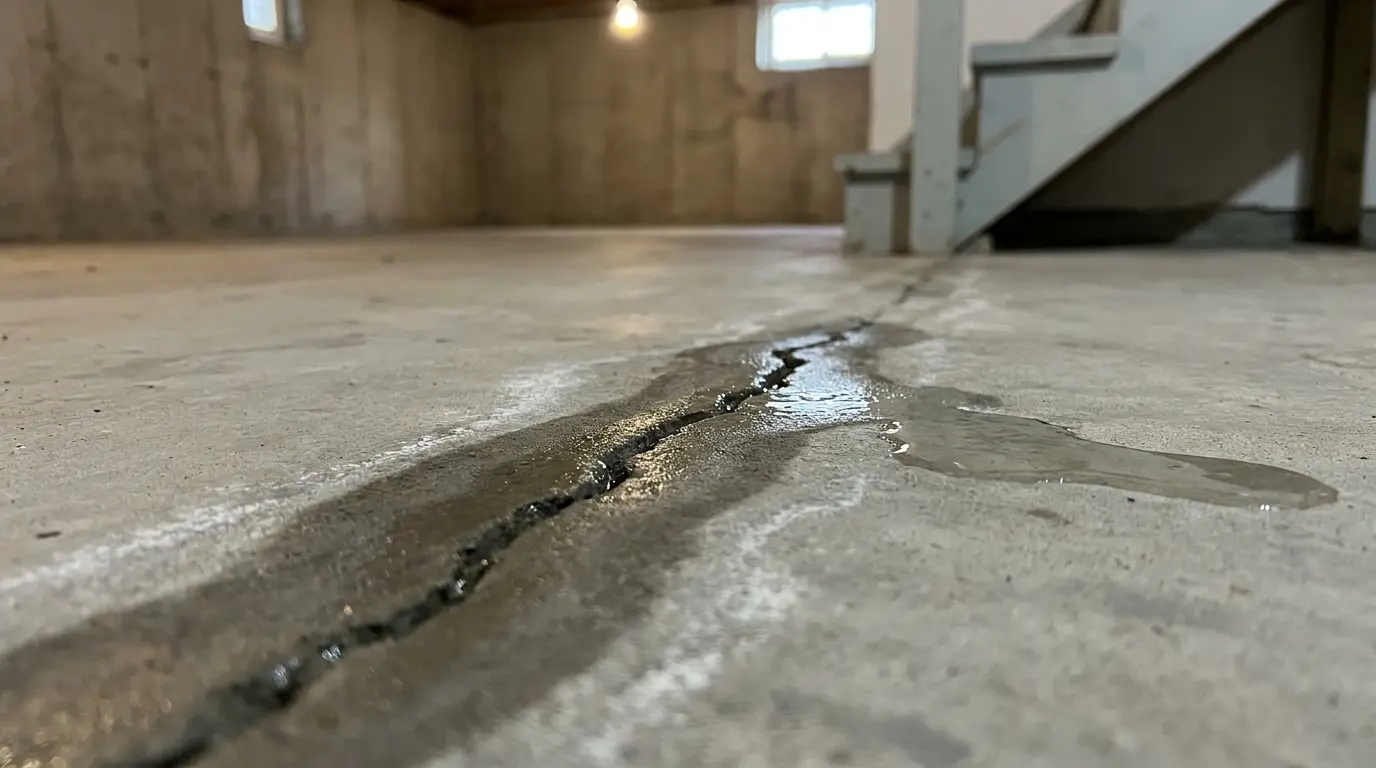
Water coming up through a Michigan basement floor can be groundwater, a sump pump that quit, a plumbing leak or a backed-up floor drain. The cause decides who fixes it, but the standing water needs to come out fast.
Can Water-Damaged Basement Drywall Be Saved in Michigan?
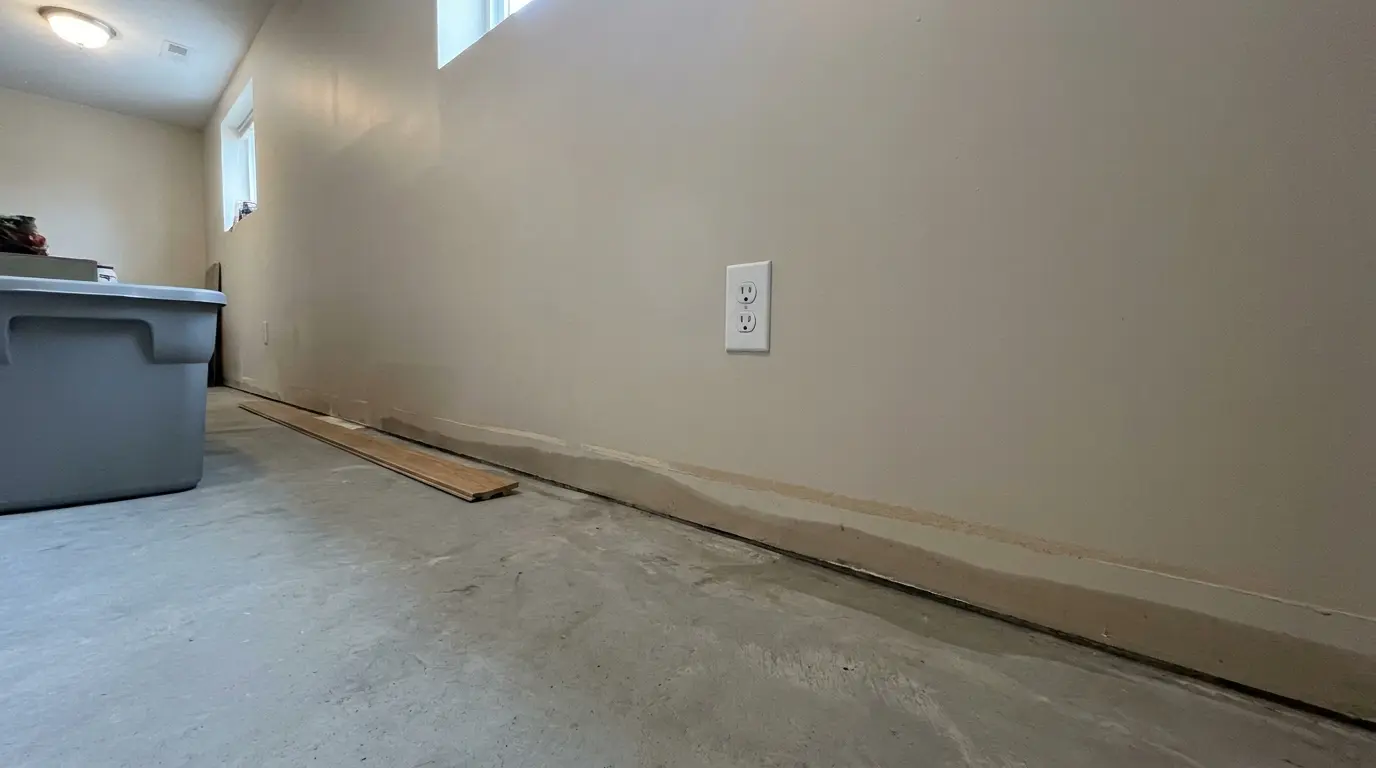
Wet basement drywall can be saved only if the leak is stopped, the water was clean, it dries fast and the board stays firm. Sewage, floodwater or wet insulation behind it means the wall comes out.
What Do You Throw Out After a Sewer Backup in Detroit?
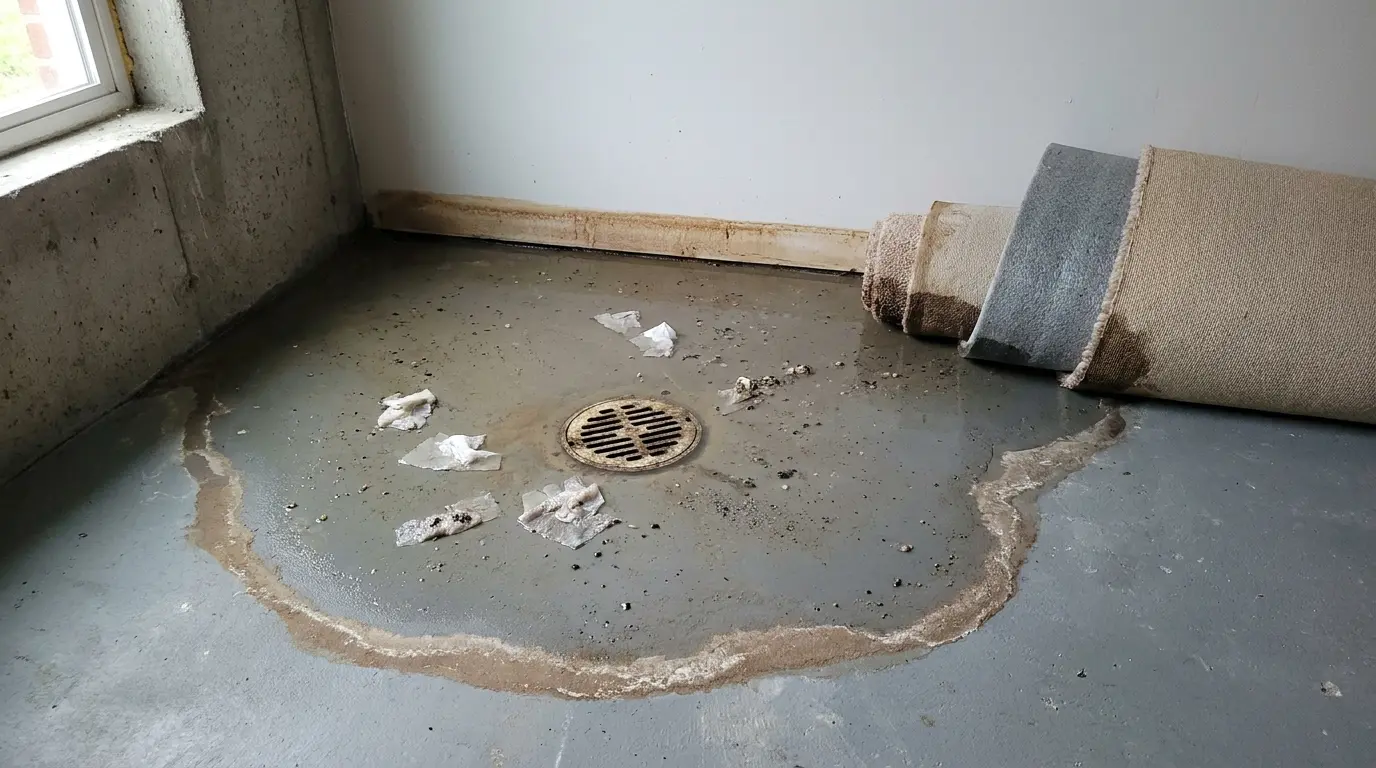
After a sewer backup in Detroit, soaked carpet, pad, drywall and insulation go, while concrete, tile and metal can usually be cleaned and kept. In most of the city, a storm-day backup is sewage too.
Tell us about your Water Damage Restoration needs in Oakland County, MI
Looking for Water Damage Restoration in Oakland County, MI? Tell our team what you need and we will help you understand the next step.
Thank You!
We've received your request and will contact you within 15 minutes during business hours.
Speak with the Response Flood & Fire team now
Call for immediate assistance and service.